

What did we learn from COP30?

Dr Ing Stefano Mainero (he/him) MIET, MIEEE
Founder, CEO
EPN Consulting Research and Innovation Ltd.
24 November 2025
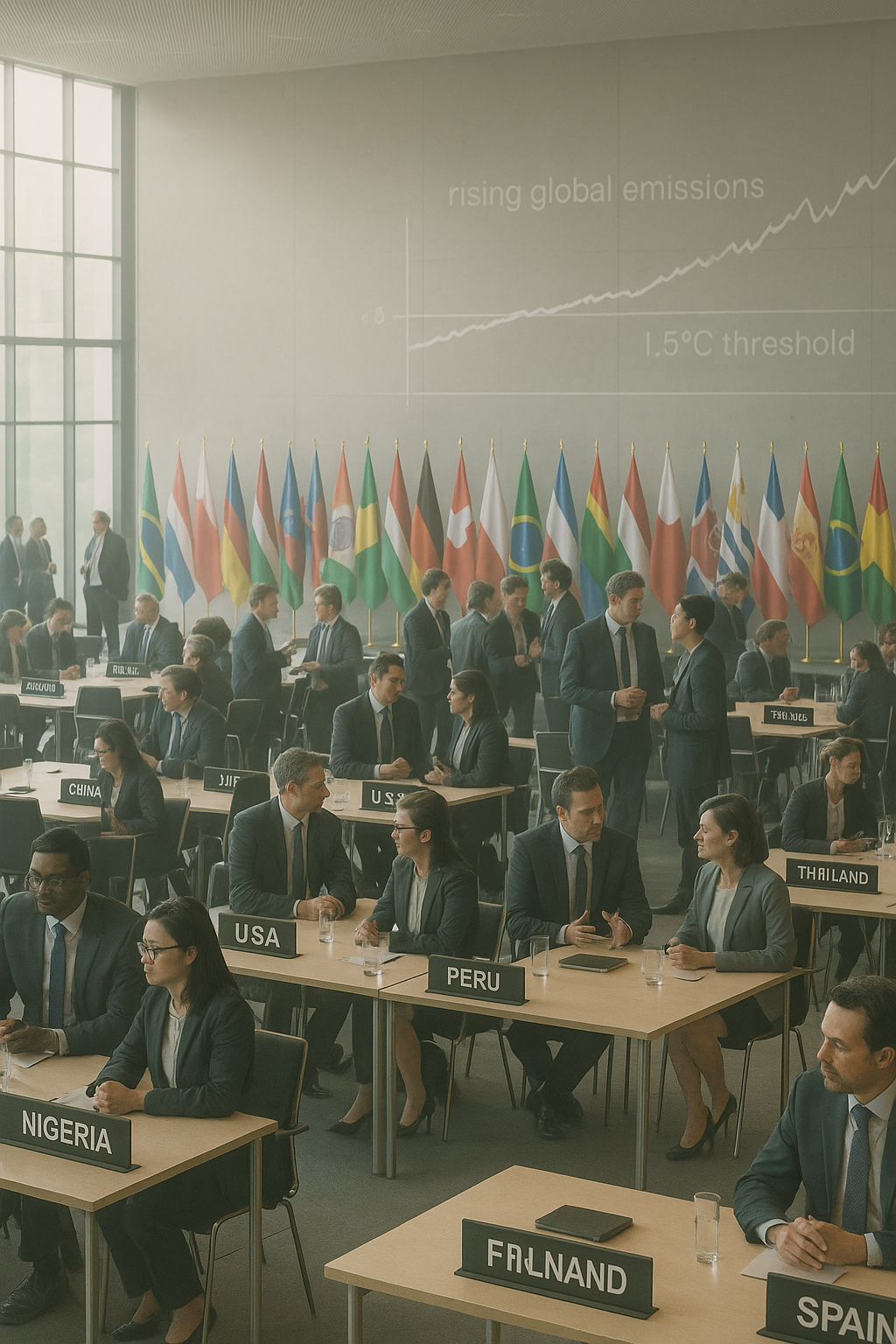
Another COP edition ended and very little decisions have been taken. Unfortunately, for the first time since COP was organised, USA didn't send any representative whereas China boasted the second most numerous representation - after Brazil, the hosting country - with 789 delegates. The UK (who co-hosted COP26 in 2021 with Italy) sent 210 representatives and India, the world's most populous country sent only 87 representatives while Ireland - 300 times less populated than India - sent a group of 74 representatives[1].
The COP30 reaffirmed the 1.5°C threshold as the Paris Agreement[2] benchmark (agreed during the COP21 in 2015), but without identifying concrete tools to achieve it. Despite the presentation of the latest research by the Global Carbon Budget Project[3] that global carbon emissions from fossil fuels are projected to rise by 1.1% in 2025 – reaching a record high, fossil fuels were never mentioned, and the energy transition was mentioned only indirectly, with reference to the final COP28 agreement in Dubai (where the "transition away" from fossil fuels was established). The "COP of truth," as Brazilian President Lula called it, has been transformed into the COP of small steps, in a geopolitical scenario unwilling to gauge the Earth's temperature.
It is pretty logical – and rhetoric – to ask ourselves what this kind of event is for, taking into account the huge amount of emissions generated by 11,000+ worldwide representatives to fly over there to decide nearly nothing.
As many experts say, the green transition is necessary but also costly. In some cases, it implies radical changes in how energy is generated, transport performed, trades organised, and many businesses are not yet ready to bear this economic and financial effort.
The short vision underlying this opinion is one important parameter not considered: climate change. The increase of the number and frequency of strong and devastating weather events - such as thunderstorms and hurricanes - is in front of all of us and broadcast by all TVs stations and the cost of damages as well as human lives is huge, but it seems this variable is not included in the full equation. The concept of prevention is not considered, and this is one of the most important aspects that should be taken into consideration.
Moving from the global situation to the EU, at the end of September 2025 the European Environment Agency (EEA) published their 2025 report[4].
Every five years, as mandated in its founding regulation, the EEA publishes a state of the environment report. Europe's environment 2025 provides decision makers at European and national levels as well as the general public with a comprehensive and cross-cutting assessment on environment, climate and sustainability in Europe.
As we read in the report foreword by the EEA Executive Director, Leena Ylä-Mononen:
“Despite the transformative ambition of the European Green Deal, which represented a paradigm shift in terms of environmental legislation and policy frameworks, underlying sustainability trends remain largely unchanged. The window for meaningful action is narrowing, and the consequences of delay are becoming more tangible. We are approaching tipping points — not only in ecosystems, but also in the social and economic systems that underpin our societies”.
Reading the report further, we find that
“Climate change and pollution impact the lives of Europeans today. From 1980 to 2023, over 240,000 fatalities have been caused by weather- and climate-related extreme events in the EU-27, with more than EUR 730 billion in economic losses. Pollution drives death and disease, with air pollution costing the EU EUR 600 billion annually in health costs and other damages, equal to 4% of GDP”.
These are facts - not opinions - that should urge each and every one of us to do our best as individuals as well as representatives of the society and industry to actively change practices and make the green transition really happen.
When we read Ireland's situation[5], we are initially happy as the country's air quality is among Europe’s best and meets EU standards, however projections show that Ireland will fall short of its 42% reduction target for 2030.
The report states:
“In recent years, water quality in Ireland has remained static, with persistent pressures primarily from agriculture, hydro morphology, forestry and sewage discharges. Biodiversity remains under threat and the state of nature is very poor. Food systems are not currently meeting sustainability targets, although positive actions are being implemented at the farm level. A rapid increase in electricity generation from renewables and early signs of increases in public transport use indicate that progress is being made. Ireland needs to speed up the transformation of its energy, transport, food and industrial systems to become more sustainable”.
Another opportunity for us to give our contribution to a better and cleaner environment is participating in EU-funded projects. As a matter of fact, in addition to change/ update / integrate legislation, money is the most required ingredient to pay for the cost of transition.
Having a good idea that could improve and/or accelerate the green transition is the first step to create a valuable collaboration with other international partners - ranging from SMEs to Universities and involving both private and public sector. A project proposal, once awarded, will give partners international visibility, allow the project idea to be spread across the EU - even replicated in other countries, and generate new collaborations. All this will be possible thanks to EU money that will speed up innovation.
In these weeks new 2026 work programmes are being published and companies should not wait any longer and get in touch with EPN Consulting Research and Innovation for fully customised help and assistance and get involved in this virtuous circle.
References
[1] https://www.carbonbrief.org/analysis-which-countries-have-sent-the-most-delegates-to-cop30/
[2] https://unfccc.int/process-and-meetings/the-paris-agreement
[3]https://globalcarbonbudget.org/fossil-fuel-co2-emissions-hit-record-high-in-2025/
[4] https://www.eea.europa.eu/en/europe-environment-2025
[5] https://www.eea.europa.eu/en/europe-environment-2025/countries/ireland