

Is it time to rethink net-zero? Part 2: Reimagine construction for impact and commercial advantage
Mike Townsend
CEO at Earthshine Group
www.earthshine-group.com
@earthshine-group.bsky.social
Watch our interview with Mike Townsend about Part 2 in his Thought Leadership Series, and read his full article.
Last time out, we faced climate reality and the need to look beyond the noise of culture wars. The crisis is real. The cost of inaction is devastating. While the smart money is continuing to invest, we’re not going deep enough or fast enough on emissions reduction. Incrementalism isn’t working. We need to rethink our net-zero strategies to deliver a rapid transformation, in each and every business, economy and society.
Nothing short of a rapid transformation across all sectors of the economy will be enough, if we are to achieve a liveable world and ensure continued, shared prosperity for present and future generations. We need a net-zero revolution in automotive, construction, healthcare, manufacturing, technology, clothing, food systems, and all the rest.
In part 2, we share a deep-dive and explore how it’s possible for construction – an industry with a major environmental impact – to rethink net-zero strategies, to deliver transformational impacts and commercial advantage.
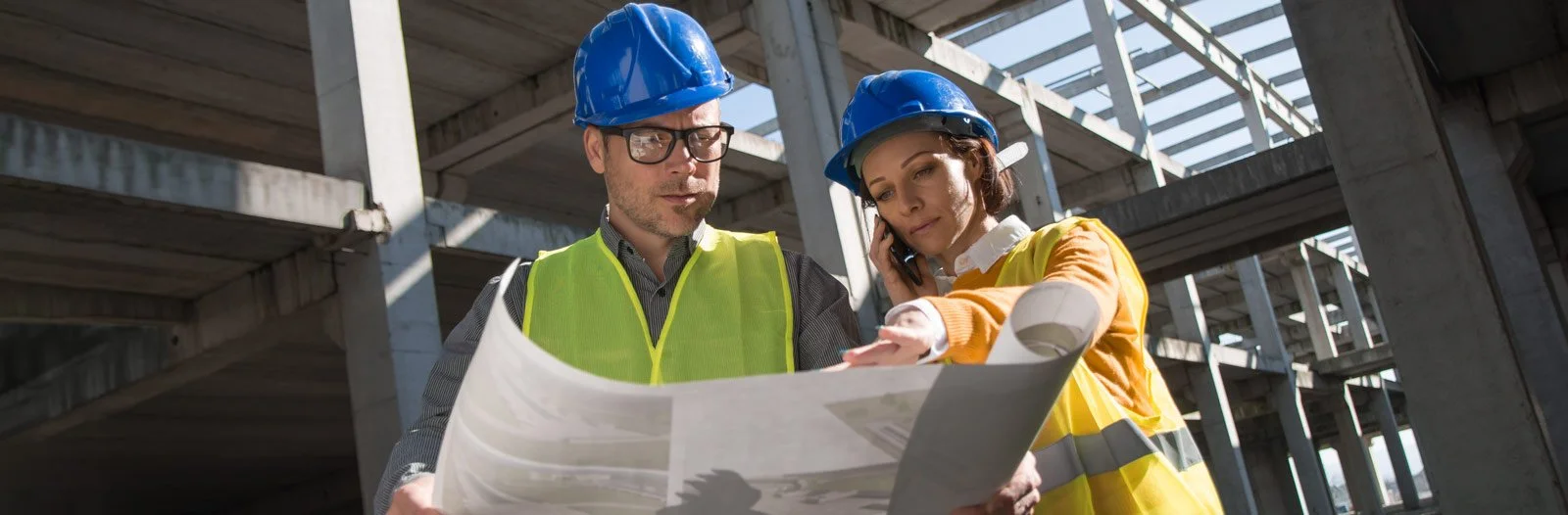
“The built environment has a massive environmental impact”
Construction has a net-zero problem
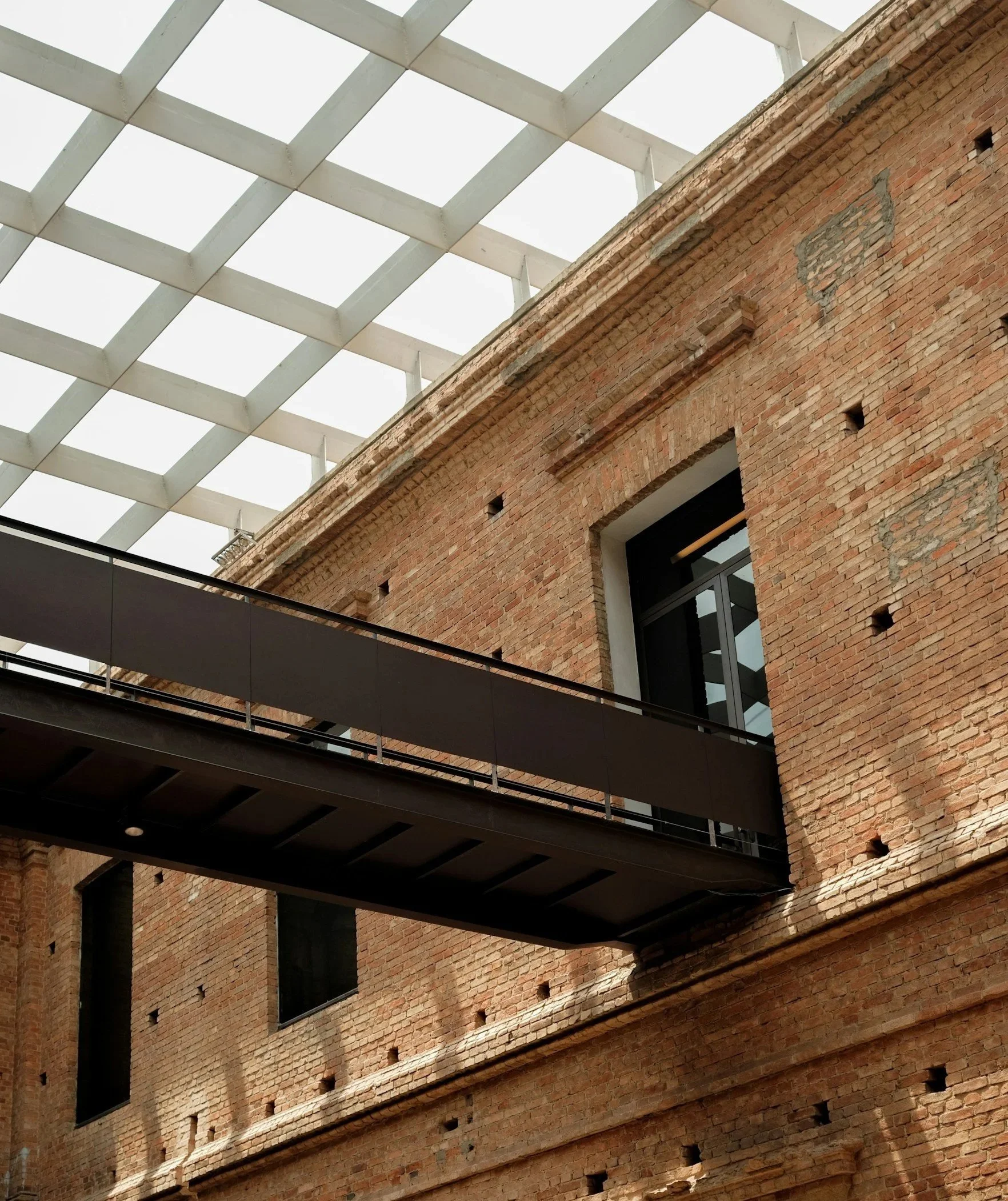
Buildings “act as a store or bank of materials for further reuse.”
Construction has a massive net-zero problem; not only in terms of the scale of impact, but also in terms of the efficacy of many of our emissions reduction strategies.
The built environment has a massive environmental impact – responsible for 39% of global energy-related emissions — and the single largest consumer of resources and raw materials on the planet, consuming more than 3 billion tonnes of virgin resources each year.
Our industry is also notoriously wasteful; construction and demolition waste (CDW) accounts for roughly one-third of total waste in the EU, and around 40% of solid waste in the United States. This level of waste costs billions of Euros and Dollars, each year.
Yet, while the industry is a big part of the problem, it can also be a big part of the solution – especially through the vital contribution towards reducing embodied emissions by embracing the circular economy.
According to the European Environment Agency, circular strategies in buildings can deliver up to 61% savings in materials-related emissions — by designing out waste, and keeping assets at their highest level of use and re-use, we reduce the pressure to extract new resources and, therefore, enable major savings in embedded carbon emissions. This goes way beyond recycling, or more accurately downcycling. More of this, later on.
The other side of the construction challenge concerns the efficacy of our net-zero strategies. Most net-zero programmes are not going to deliver on their ambitious targets, and certainly not in a cost-effective manner.
OK, we might have established science-based targets. Yet, as Morningstar's Hortense Bioy observes, “Having science-based targets does not necessarily imply that a company is on the right track to achieving net zero.” Validated targets are one thing, but we also need credible transition plans.
Mind the credibility gap!
Recent analysis developed by the Transition Pathway Initiative – hosted within the London School of Economics – finds a lack credible climate transition planning with less than 10% of companies meeting any of the strategic criteria required for effective transition planning and implementation – meaning that while most companies are integrating ‘climate’ into operational decision-making, many are falling short on strategic planning. So, here’s where things can start to go off-track.
The fundamental problem lies in the methodologies we’re all following; almost exclusively founded on a (misguided) managerial mindset, which emphasises incremental change, supported with continuous improvement techniques.
Our starting point is looking for ways to reduce the carbon emissions associated with our current business-as-usual enterprise, seeking incremental reductions each year, towards a linear annual reduction target (LAR). We look for early quick wins in efficiency, waste reduction, and switching to renewable energies, and so on.
This approach provides the illusion of progress towards net-zero, especially during the early stages, with little in the way of further emissions reduction opportunities, thereafter.
We leave the more challenging “innovation gaps” for some later date, we tend towards diminishing returns and the “net-zero crunch”– the point at which they run out of genuine carbon reduction opportunities, within the current framing of the business.
We might observe how many of our carbon reduction charts tend to resemble radioactivity decay curves – displaying some initial drop in emissions, but then tailing off with increasingly small increments, towards diminishing returns, potentially going on for decades.
In following this pathway, we’re all lacking in the strategic thinking, necessary to deliver large-scale reductions in emissions. Our model for change is completely wrong.
Break down the silos!
Jumping down a level, we’re also too siloed in our approach. Our Scope 3 emissions represent a massive challenge – typically 90% or more of our total footprint – and, therefore, an essential priority in seeking major improvements.
Yet, we tend to tackle this challenge by urging each individual supplier to achieve net-zero emissions for their own businesses and products manufactured. The thinking seems to be that the sum of all suppliers’ progress on emissions reduction will surely lead us to achieve our net-zero targets, won’t it?
Although, as Copenhagen City council realised, this reductionist approach does not work in practice. Instead, their new Climate Action Strategy takes a whole value chain approach; starting with rethinking the “demand” side of the equation, first – including design and specifications – which then enables us to think about re-designing the value chain and driving supply side behaviours – to secure more radical reductions in emissions. We get the supply chains we deserve, right?
Our default mindset is all about preserving our present-day model for business and supply chain, only seeking to make it better by increments. In taking this position, we establish a path dependency which constrains future opportunities, choices and actions – leading to a major risk of net-zero failure.
It comes as no surprise, therefore, that 93% of companies are currently destined to fail in meeting their net-zero targets. We’re quite simply playing the wrong game. We need to engage in much more transformational thinking and practice.
A time to reimagine!
The current industry mindset, process, roles, and industry structure are simply not compatible with achieving net-zero emissions and circularity – and, certainly not achieving these ends in commercially effective ways. It’s time to completely transform construction.
This means we need to reimagine everything – a new model based on new possibilities — created by joining-all-the-dots on a series of interconnected shifts that will help us deliver radical climate action at scale, while also generating new entrepreneurial opportunities.
Everything changes – from design, through value chains and supply markets, rethinking commerce and how we make money, how we engage in collaborative innovation, and in all our roles and skills.
Let’s dig-in and explore further detail, along with some real examples.

Repurposing old materials for new projects
It all starts with design
In following this design rationale, buildings also achieve a secondary function – in addition to their primary purpose of accommodation – they also act as a store or bank of materials for further reuse.
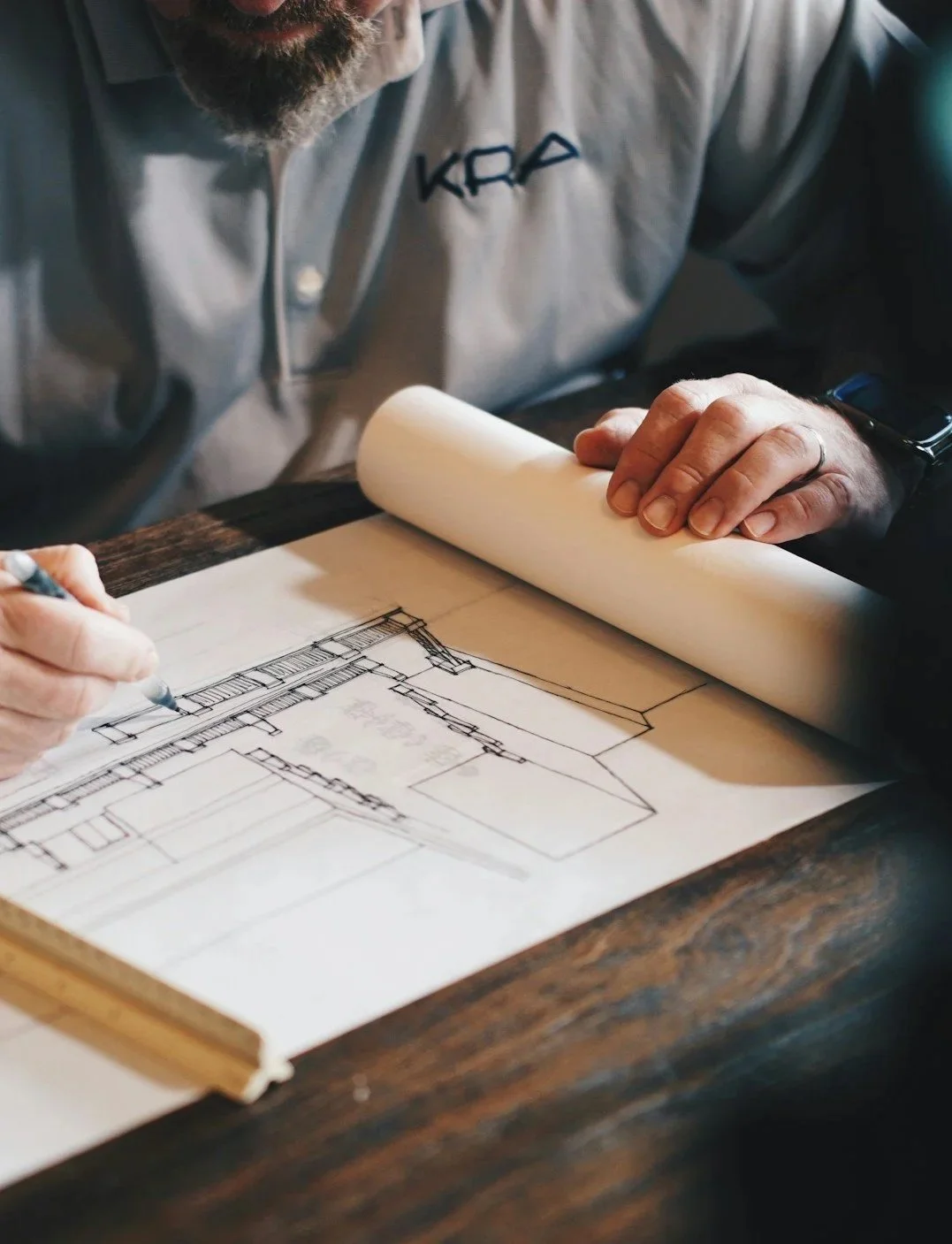
The Circle House — a 60-unit social housing project in Lisbjerg, Denmark — provides a living example of rethinking design through the lens of circularity; not only considering functionality, aesthetics and value, but also accounting for buildings as materials banks, considering what happens to their assets and resources beyond their first intended lifetime.
Circle House challenges conventional the build-use-dispose model by designing and using components that can be easily taken apart — somewhat like a LEGO kit — with disassembly and reuse considered for every part of the building. At the end-of-first-life, 90% of its components and resources can be disassembled and reused, retaining much of their initial value.
Following this approach, we adopt a new role of resource custodian, redesigning the value chain for product take-back, refurbishment and remanufacturing at scale – supported with circular infrastructure, supply chains and logistics.
Taking this step, rightly, has profound implications for the whole value chain.
We can rethink design by bringing forward the innovation gap – adopting a future-oriented approach – we reframe the design challenge from, “where can we find carbon savings in today’s design”, towards “what would it take to design and deliver a net-zero building – what would that look like?”
We can push the circular design envelope as far as possible by ‘optimising’ circular lifecycles of systems, elements, resources and materials — including a focus on longevity, flexibility, adaptability, and design for assembly, disassembly and recoverability. We can think about different types of ‘loops’ for different parts of the construction project (mindful of the different lifecycle potential for each specific asset).
Reimagine value chains and supply markets
We cannot hope to develop net-zero and circular economy in isolation; no single entity can achieve what is required, without engaging with all actors, right through the value chain.
We need to innovate like crazy – in collaboration with suppliers, manufacturers, intermediaries, customers and others – to co-create common solutions and shared investments in pursuit of net-zero goals and commercial advantage.
Back to the Circle House, this project involved collaboration across 25 different organisations — including architects, circularity consultants, entrepreneurs, contractors, the municipality, component manufacturers and materials suppliers — all taking time to explore issues and questions that had never been considered on construction projects.
Effective partnerships and commercial arrangements are essential to support this level of collaborative innovation.
When designing and building their new town hall using only reusable materials, the municipality of Venlo in the Netherlands developed an innovative commercial deal to incentivise materials stewardship: the client asked material suppliers to provide guaranteed take-back systems at the end of the building’s life, which would guarantee that materials keep their residual value with pre-agreed prices.
Taking this long-term perspective helps to realise a continuous cycle of resources, along with financial incentives for managing the complete lifecycle of resources. Commercial innovation like this is essential for a net-zero and circular future.
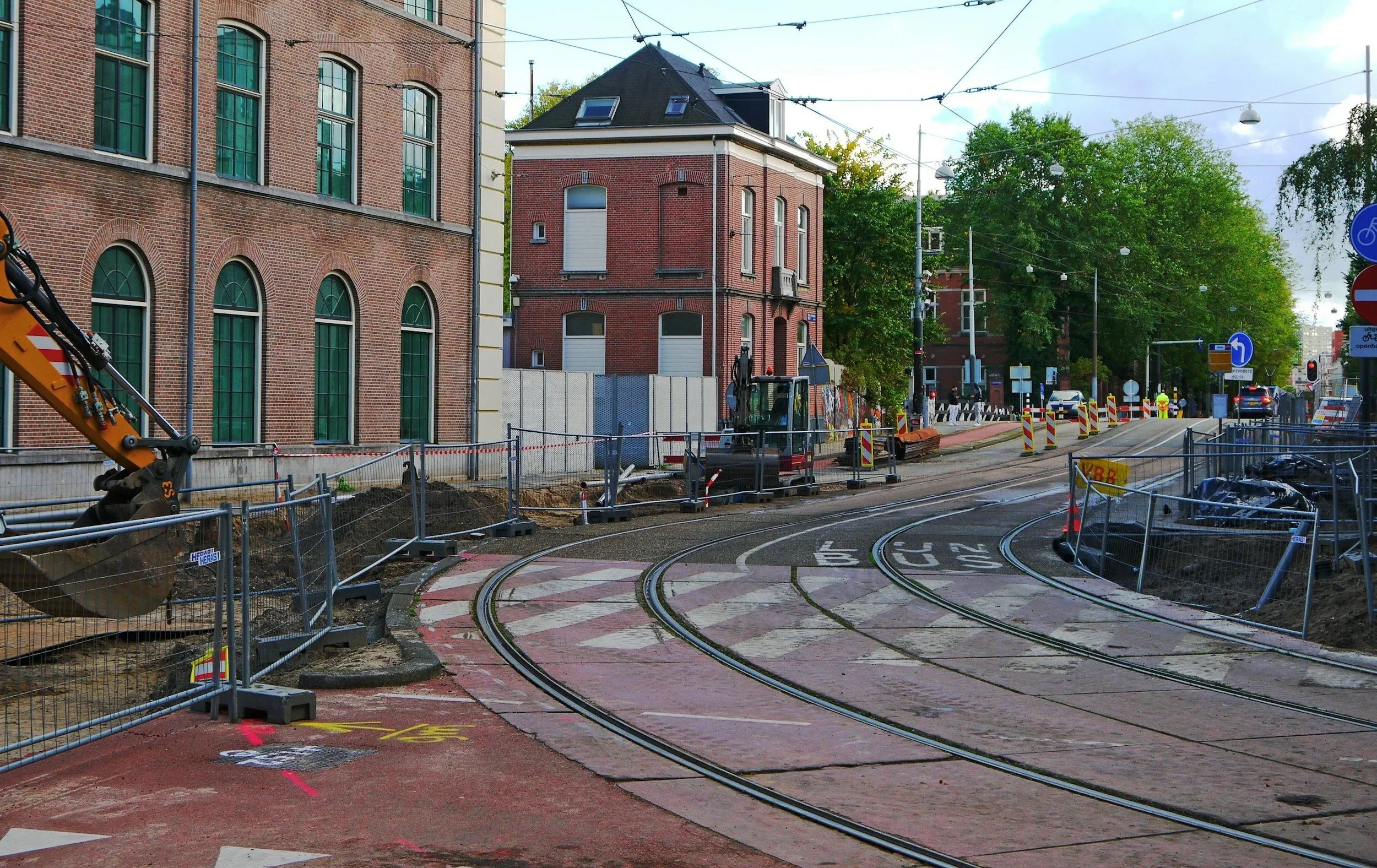
Re-using concrete pavers is crucial for reaching Amsterdam’s policy goals in circularity
On the money!
It’s no accident that going circular requires us to design and manufacture high-quality, longer-life, reusable circular products – so, this will most likely mean our buildings become more expensive, right?
Perhaps not. Through business model and commercial innovation, there is an opportunity to capture more economic value by generating more value-touch-points through multiple product lives.
As Anders Lendager of Lendager UP realised, there are large sums of money to be saved by harvesting resources for circular construction. On one of their projects in Norway — a business area being converted to 450,000 m2 of residential development — Lendager prepared a material analysis of the entire project, finding €120 million of building parts and resources — including windows, doors and many other components that could be reused.
The building contractor involved was able to harvest these resources as assets, towards the construction of the new building.
Shifting the mindset, we can appreciate there’s more money to be made in circular resources than there is in linear waste. And, if we’re smart, we might also consider spreading any apparently higher initial costs of production across multiple, extended product lifecycles.
We don’t necessarily have to recover all production costs at the initial point-of-sale; if asset producers retain ownership of circular assets and products, this enables both life-long responsibility and income, while ensuring greater affordability for each building user. All of which means that more ‘value’ can be harvested and shared between value chain partners.

“There are large sums of money to be saved by harvesting resources for circular construction”
It’s a people thing!
The transition to a circular economy demands a rapid and nationwide upskilling of the workforce – with implications at all levels – whether business leaders, management and professionals, or construction operatives.
Rethinking operative skills in a circular economy; If we focus on the demolition process, we can see that companies involved in this activity will need to evolve significant circular skills, developing resource harvesting and lifecycle management at scale.
One of the best examples of a company that really sought to rethink demolition skills, is Unbuilders — a company of salvage experts based in Vancouver, Canada – with their approach to fully integrating materials stewardship into their “unbuilding” process.
We can only watch and marvel at the care and precision taken by the Unbuilders team of carpenters, roofers, framers and trades people, as they painstakingly disassemble properties, layer by layer — upcycling resources back into the supply chain. Their team achieved an amazing salvage and reuse rate of 99% from a 1930s property at 31st Street in Vancouver – with resources subsequently remanufactured into bars, floors and table tops at local restaurants.
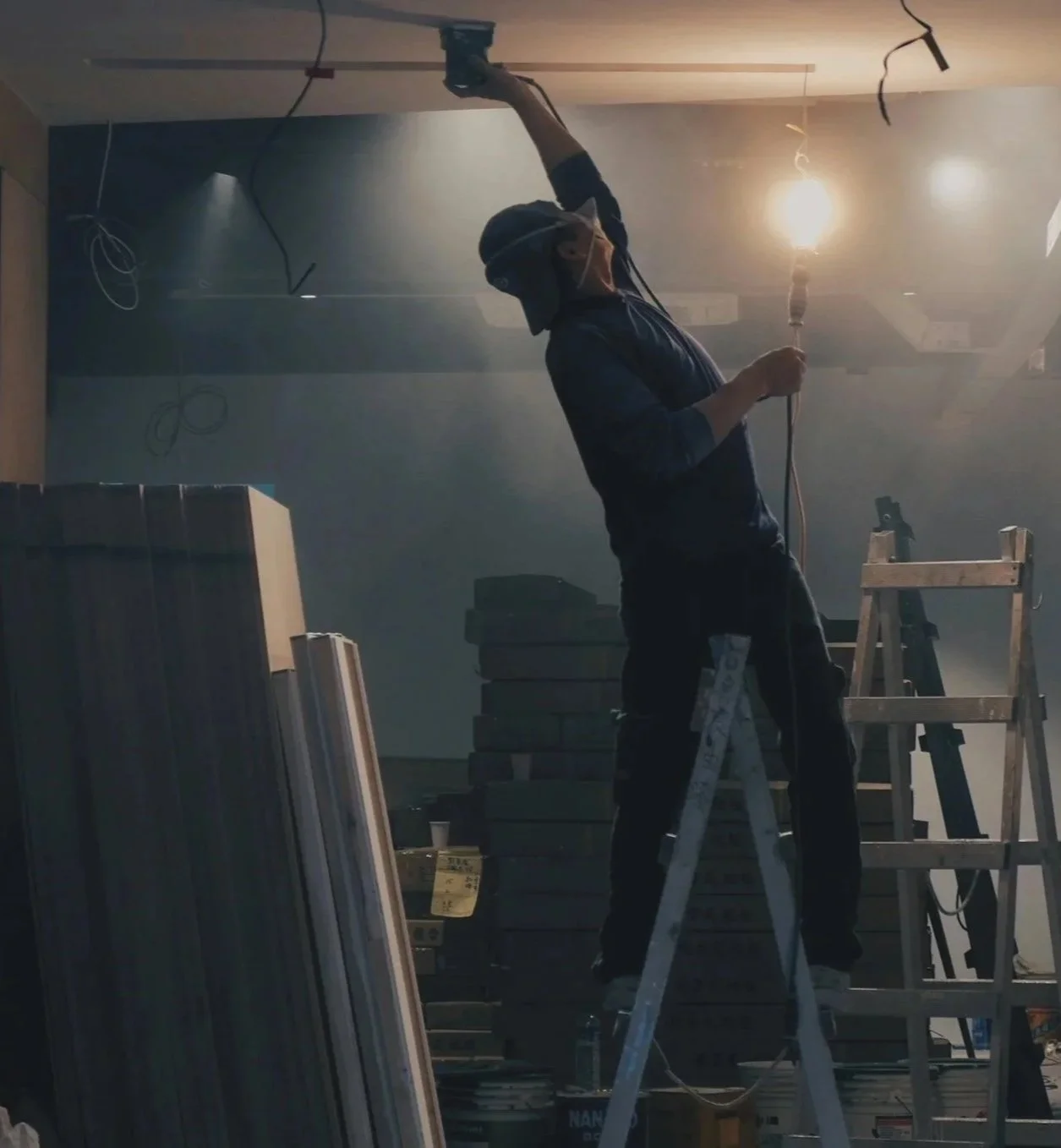
Their impressive resource-harvesting process also helps to enable societal benefits — deconstruction is understood to generate up to six jobs for every single traditional demolition job. This tends to promote the creation of new opportunities for the next generation, developing new skills and apprenticeships.
We can also consider management and professional skills. Procurement and commercial professionals, for example, can take a pivotal role in facilitating resource custodianship and capturing long-term value – by re-purposing and upgrading key commercial techniques, including:
harnessing strategic thinking for value chain re-design;
whole-life cost modelling to help manage costs over multiple circular asset lives;
business model innovation to find new ways of making money;
cost structure visibility to challenge ensure sustainable solutions are affordable; and
develop the maturity and scale of supply markets for new and innovative materials.
Essentially, procurement professionals become value chain orchestrators.
The business of change
There’s no doubt that the construction industry offers massive potential to scale major reductions in carbon emissions – especially through the vital contribution offered by the circular economy.
Following a more strategic approach, businesses can avoid years of wasted effort, costly mistakes and the risk of path dependencies – they become future-proof, generating value into the long-term.
Going circular means a profound change in the industry – with major implications for project design, how our businesses, value chains and supply markets work, how we make money, and for jobs and skills.
This level of change cannot be achieved in isolation — a circular transformation will necessarily involve the whole value chain, working in concert to orchestrate circular and systemic change.
Embracing the circular economy at scale also provides an essential catalyst for economic and social and regeneration – creating new jobs, livelihoods and greater shared prosperity, as well as greatly improved environmental impacts.
Yet, delivering this level of change is hard. In Part 3, we will explore how we to make more transformational strategies happen in practice — a big challenge, with big risks, but also with a big prize for net-zero, circular economy winners.
Written by

Mike Townsend
CEO at Earthshine Group
www.earthshine-group.com
@earthshine-group.bsky.social
This article has been developed and written without the use of AI — never outsource a core competence — use it or lose it!
Further information:
If you’d like to know more about how to rethink your net-zero strategy to deliver transformational impacts and competitive advantage – you might explore Earthshine Group’s Sustainability Transformation Accelerator program: A powerful collaboration with Copenhagen Business School, developed to equip business leaders in moving beyond incremental change and unlocking impactful breakthrough strategies that drive sustainable business transformation and commercial advantage (April 8-10, 2026).
Mike will be joining Professor Andreas Rasche for a CBS Executive Morning Brief (webinar) on 26th February — exploring, whether it’s time to rethink net-zero strategies for impact and commercial advantage; redesigning business models and value chains to make net-zero work technically, sustainably, and commercially.
And, look out for our new white paper: Don’t Waste Your Time on Net-Zero provides a strategic guide to help progressive businesses develop more transformational strategies – avoiding the common pitfalls and wasted effort – so they can accelerate on emissions reduction, bringing forward the ‘innovation gap’, and finding the new ‘sweet spot’, with net-zero solutions that work technically, sustainably and commercially (February 2026).
Mike was recently speaking on the ‘Unlocking Green Skills at Scale: What Will It Take’ panel at the Circular Economy UK 2026 conference, held at ICC in Birmingham on Thursday 5th February, 2026.