

Kavin Aadithiyan
Masters student in sustainability, Trinity Business School
Across sustainability events I have attended lately, one theme has kept popping up: resilience. Sustainability is often thought of as businesses acting better to protect the environment. While that is true, a core feature of sustainability reporting is also recognising the factors that might impact a business (and hopefully acting on that information). In this article, I write about personal conversations with two people from different fields on decarbonisation as a value addition tool, and on how the world’s second largest economy has a similar outlook.
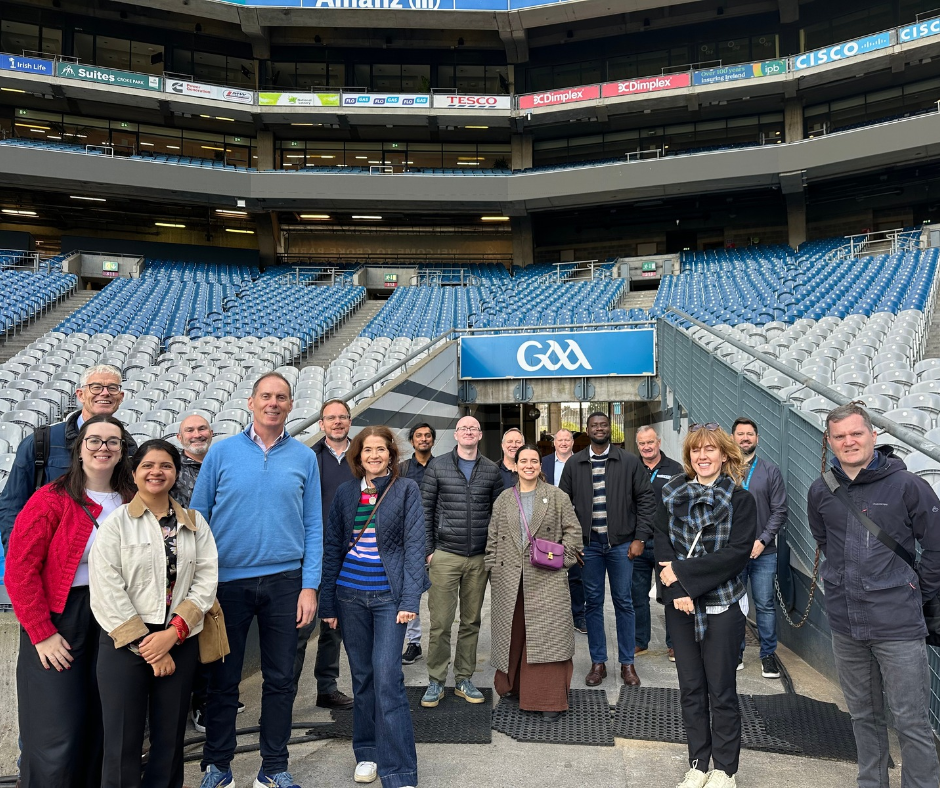
Smarter Energy Challenge case study site visit to Croke Park
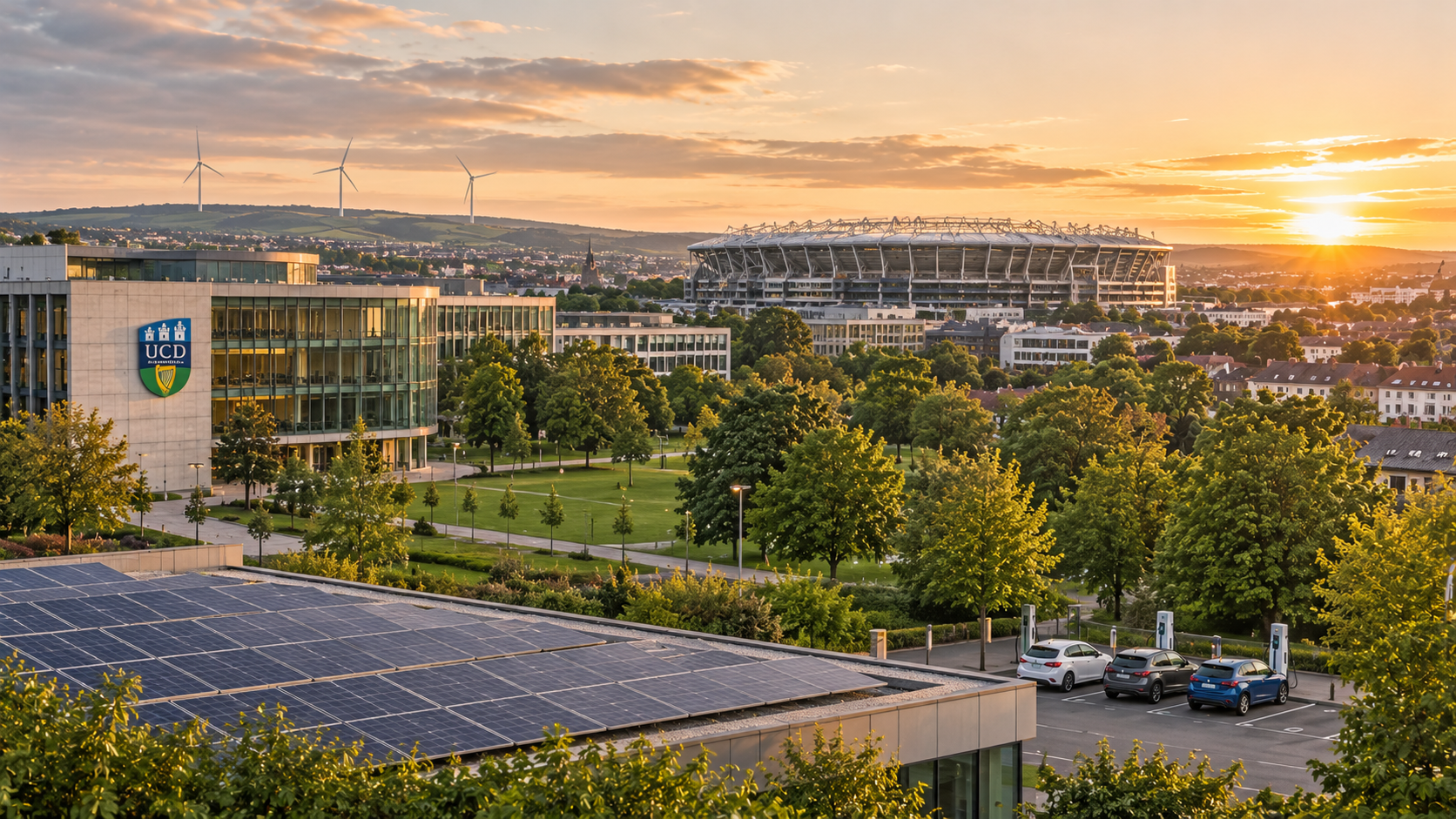
The first event that I want to write about is UCD’s Net Zero Plan to 2040. The university recently unveiled its goal, and it is certainly ambitious considering that the main campus sits on 133 hectares, has 389,000 sq.m of built environment, and tens of thousands of inhabitants and visitors. As part of its baseline calculations, UCD estimated its emissions at 92,510 tonnes of CO₂e in 2024, with Scope 3 emissions making up 81%. This is relevant to its suppliers and delivery partners, who would be asked to clean up their operations as part of UCD’s own targets. Indeed, one supplier that has started on this journey was represented at the event - SAP Landscapes. The company manages UCD's sprawling grounds and is shifting to electric equipment and vehicles. But Janice Leonard, ESG and Business Systems Lead, told me that a crucial factor in achieving internal buy-in was showcasing decarbonisation’s ability to shield the company from energy price shocks. While client requirements have played a role, the advantage of resilience has made decarbonisation a priority for the company.
My first visit to Croke Park was unusual in that it wasn’t for a sporting or entertainment event but for a visit to its energy system. Organised by Techies Go Green, Croke Park’s Sustainability Manager Colin O’Brien presented the scale of the stadium’s energy use (and gave a tour of it). Like UCD, Croke Park’s operations rival those of a small city. With over 1.5 million annual visitors, the energy needs of the venue are in the more visible areas of heating and lighting, but there is also the stuff beneath the surface (literally, in this case), like the heating system which ensures that the grass on the pitch grows to an exact standard throughout the year. Colin’s presentation touched upon emissions reduction through renewable electricity supply, as well as electrifying parts of the operations currently powered by fossil fuels, which ties in to their SBTi-aligned target of reducing emissions by 50.40% by 2032 from a 2022 baseline year. But, just as importantly, weaning operations off fossil fuels protects it from price shocks like the one earlier this decade. As with SAP Landscapes, decarbonisation presents Croke Park with clear material benefits and helps drive initiatives forward.
The alignment of resilience and sustainability isn’t just relevant to companies. For countries looking to avoid supply shocks to their economies and societies, this is a clear priority. Take the case of China - the country has been rolling out solar, wind, and batteries at breakneck speed while also electrifying transport and heavy industry. The results of these measures were visible earlier this year when supply constraints at the Strait of Hormuz barely caused any disruptions to its economy. With Europe exposed to energy supply shocks, it would be well placed to learn from China’s playbook.
“Sustainability is not just about a business’ impact on the outside world, but also the outside world’s impact on a business.”
While energy is an oft-spoken-about factor, there are other components of a supply chain that would benefit from the resilience offered by embedding sustainability in operations (something to explore in another piece? Let's see!). Staying on the topic of resilience and energy, the conference organised as part of Techies Go Green’s Smarter Energy Challenge was a stellar event with excellent speakers, and future articles will feature insights I gleaned from it. To join forthcoming events and experience sustainability in action, learn more about the Smarter Energy Challenge here.
Kavin Aadithyan
Kavin is a Masters student in sustainability at Trinity Business School. He has previously worked at the intersection of energy and e-mobility, where he broke down the complexities of the sectors to a general audience. His work spanned content, communications, marketing, and PR, as well as a stint in developing datasets for AI/LLM models. When not reading about energy or sustainability, he can be found dreaming about cycling across the greenways of Ireland.