Is it time to rethink net-zero? Part 3: Driving circular transformations for impact, competitive advantage and shared prosperity.
Mike Townsend
CEO at Earthshine Group
www.earthshine-group.com
@earthshine-group.bsky.social
Watch the full discussion with Mike Townsend for further insights into rethinking net zero in construction →
Construction needs to harness the circular economy and transform, if we are to have any chance of hitting our net-zero targets. It’s already possible to deliver circularity at scale and maintain competitive advantage, yet big changes are needed. Are we ready to do what it takes?
In Part 2, we explored how construction has a major net-zero challenge, in terms of the scale of the carbon footprint and the credibility of emissions reduction strategies. We could also see how the industry also has a massive opportunity for major reductions in embodied emissions, especially through the vital contribution from an emergent circular economy.
We might also appreciate how some companies are now bringing forward their circular economy ambitions, due to the combined effects of geopolitical events on the security, availability and pricing for energy and resources. This really is the time to drive innovation and transformation for commercial reasons, as well as for delivering a greater impact on climate action.
Yet, going circular will mean profound changes in the industry – with major implications for project design, how our businesses, value chains and supply markets work, how we make money, and for jobs and skills. Delivering this level of transformational change is not easy, especially in an industry that can be conservative and slow to change.
In Part 3, we explore practical, commercially viable guidance for how to implement circularity at scale – a major challenge with significant risks, but also with big prizes for net-zero winners.
New roadmaps
A circular transformation takes us to new places – a new way of working for the whole value chain: we become resource custodians, harnessing technical and commercial innovation; we reimagine value chains and supply markets for product take-back; we redefine business models and how we make money; we take collaborative innovation to a whole new level; and we redefine our roles and skills. Everything changes – as it should, when we need to achieve a radically different set of outcomes.
Although, meaningful and lasting change does not come easy; we need new roadmaps, built on effective strategies for transformational change, if we are to navigate through an increasingly challenging economic landscape – towards long-term value and shared prosperity, within a living economy.

While there is an encouraging array of new reports and guidance on how to adopt the circular economy in construction – and these good works all have something to add to the debate – our research at Earthshine Group shows that much of the current guidance is way too tactical; tending to focus on how to integrate circular economy activities within the current way of working, rather than taking the opportunity to rethink how the industry needs to work in a circular world. There are further gaps in the strategic agenda, with limited attention to commercial innovation and how we develop and scale circular markets.
Some organisations might select a pragmatic circular entry-point, perhaps, adopting one of the widely-available digital market places? This is fine, as far as it goes; although, in practice, these systems can be constrained by the fairly modest availability of used building products and resources, current registered. Despite having a tech platform, we can only scale as fast as the real-world reality of resource harvesting and value chain circularity progresses.
A digital market place, of course, can never provide a complete solution. A study led by the Institute of Technology and Innovation at the University of Southern Denmark, highlights a number of barriers to scaling, “The platforms are struggling to implement circularity facing institutional challenges such as, collaboration, supply chain, distribution of roles, transfer of liability, financing structure, and forms of ownership.”
And so, if we seek to drive the shift towards greater circularity in construction, we will have to make major structural changes in how the industry operates.
If we neglect the transformation imperative, the risk is that circular economy could fail to reach it’s true potential, scale and commercial viability in construction. Fundamentally, we need to develop a more future-oriented pathway for circular business, value chain and industry transformation.
We also need to embrace complexity. As much as we’d like to believe there could be five or six easy steps to deliver our new vision, Steve Hearsum, author of No Silver Bullet reminds us; we need to avoid over-simplification and the idea of easy fixes. In reality, going circular is a complex, multi-layered and systems-based challenge. If it was easy, we’d already be there.
For an effective circular transformation, we need a much more comprehensive framework for business and industry change, that will help us navigate risk, strategic opportunity and complexity in a focused way. This level of work warrants a full paper, but let’s explore seven key principles for circular transformation.
Reframe the game
Having recognised the need for an authentic transform, our first step is to change the rules of the game, so that we can enable a radically different outcome. We need to avoid being constrained by present-day norms and strictures.
This involves redefining our criteria for ‘business success’ to free-up the space for bold, new thinking and new choices in support of our circular economy transformations. What does good look like, when we operate within a circular economy?Are we ready to explore new commercial models and how we make money? What new guiding principles do we need, and what sacred cows can we leave behind?
Meeting this challenge is all about opening minds, towards developing a radically different future. As Anne Pitcher, former managing director of Selfridges Group, describes in her deeply thoughtful and insightful essay on the future of retail,
“We have to disassemble our businesses and rebuild in an entirely new shape.”
She’s absolutely right. This key principle also holds true for construction in the new era. And, if we’re serious about reframing the game in support of a new model of business success, we need to get match-fit and ready for all this transformation entails.
Getting match-fit
We need to ensure we have the right conditions in place to support and nurture our circular transformation – this is primarily about mindsets and leadership.
Embracing an “integrated mindset”, anything is possible. We can open-up to new possibilities, and challenge previously held assumptions about what success looks like, and how we might get there. By allowing ourselves to be open to new ideas and new thinking, we’re able to become innovative market disruptors, rather than managerial incumbents locked into incremental pathways.
A key part of the mindset shift is all about developing “Both+And” thinking, where we’re able to see past false binary choices – such as whether we might focus on sustainability or on the economy – and, instead, find a new ‘sweet spot’, developing sustainable solutions that also work commercially.
For example, when exploring the potential for circular M&E systems, an integrated mindset helps us to see new possibilities for business model and commercial innovation: we see beyond present-day constraints and how, by extending useful product lives – through repair, refurbishment and remanufacturing – we can create more value touch-points and harvest higher levels of income from reusing the same physical assets, over a longer time frame.
We will also need support with what Paul Polman calls courageous leadership – where leaders are unafraid to experiment and try bold new approaches, “so strongly purpose-driven that they understand it is uncomfortable to set targets that you don’t know how to achieve, but that are needed.” Without courageous leadership, we will see little real change.
The depth of our courage will also be underpinned by the depth of understanding. Boards will need to close the knowledge gap on circular risks and opportunities, in order to develop robust positions and decision-making.
We’re now match-fit, ready to think and act more in more transformational ways.
Future-oriented ways of working
To deliver an authentic transformation, we need a new way of working, fully compatible with our ambitions for net-zero, circular and profitable enterprise.
This is fundamental. And, to avoid a common misstep, we should resist the temptation of jumping straight into digitising our business-as-usual process, or simply trying to incorporate AI into our current workflow; this will not directly deliver the level of transformation we need to see; in fact, the tech-first route will more likely constrain what we can achieve now, and create path-dependencies that will hinder our future choices. We need to reinvent the process first, we can then digitise, later.
Adopting an integrated mindset, focused on transformation, we can leave behind our incremental toolkit and develop a future-oriented approach to redesigning our business and value chain.
Of course, rather than trying to change the whole extended enterprise at once, we might start with creating the safe space to experiment – where we can bring forward the innovation gap – to develop and test new innovations in collaboration with key innovators in the value chain, towards a new way of working for circular, net-zero projects. We might select a suitable project or programme of work, such as a new housing development, ideally representative of our business portfolio: offering sufficient scope for circular innovation; manageable in size to enable experimentation, yet large enough to deliver a meaningful impact. We will need to pull together our most innovative project team and value chain partners to work together in reimagining project design and delivery.
We can start by focusing the integrated team on the future-oriented design challenge, moving from “where can we find carbon savings in today’s design”, towards the real challenge, “what would it take to design and deliver a net-zero building – what would that look like?”
This means we totally rethink project design for circularity, longer lifecycles, disassembly, refurbishment, remanufacture and reuse. Perhaps, we might push the boundaries and strive for 50% reuse of components, rather than 50% downcycling? As part of this process we can take the opportunity to develop a full feasibility study to evaluate circularity economy potential for each specific asset and system, pushing the envelope technically and commercially, including new business models. We can then move on to envisioning the ideal future state value chain – how it will need to look, function and perform – in delivering our net-zero, circular project.
We can deploy backcasting techniques – comparing this future-oriented project design and value chain with where we are, today; working backwards from this point, developing the pathway and key stages and milestones we will need to establish on our transformational journey, towards this end point. Developing our new way of working, we can build on the platform enabled by Modern Methods of Construction (MMC) – with the focus on standardisation, mass production and factory-based, off-site construction. This process is all about strategic innovation – remembering to leave behind our current state and incremental thinking, which provides nothing more than a baseline, not something to constrain where we need to go next.
OK, so far so good. We can now start to visualise our future-oriented way of working, but where’s the example – who works like this in construction? This writer has been looking for years: it can be hard to find evidence of this level of process transformation in construction. There is, however, much we can learn from other sectors, including automotive.
French connection
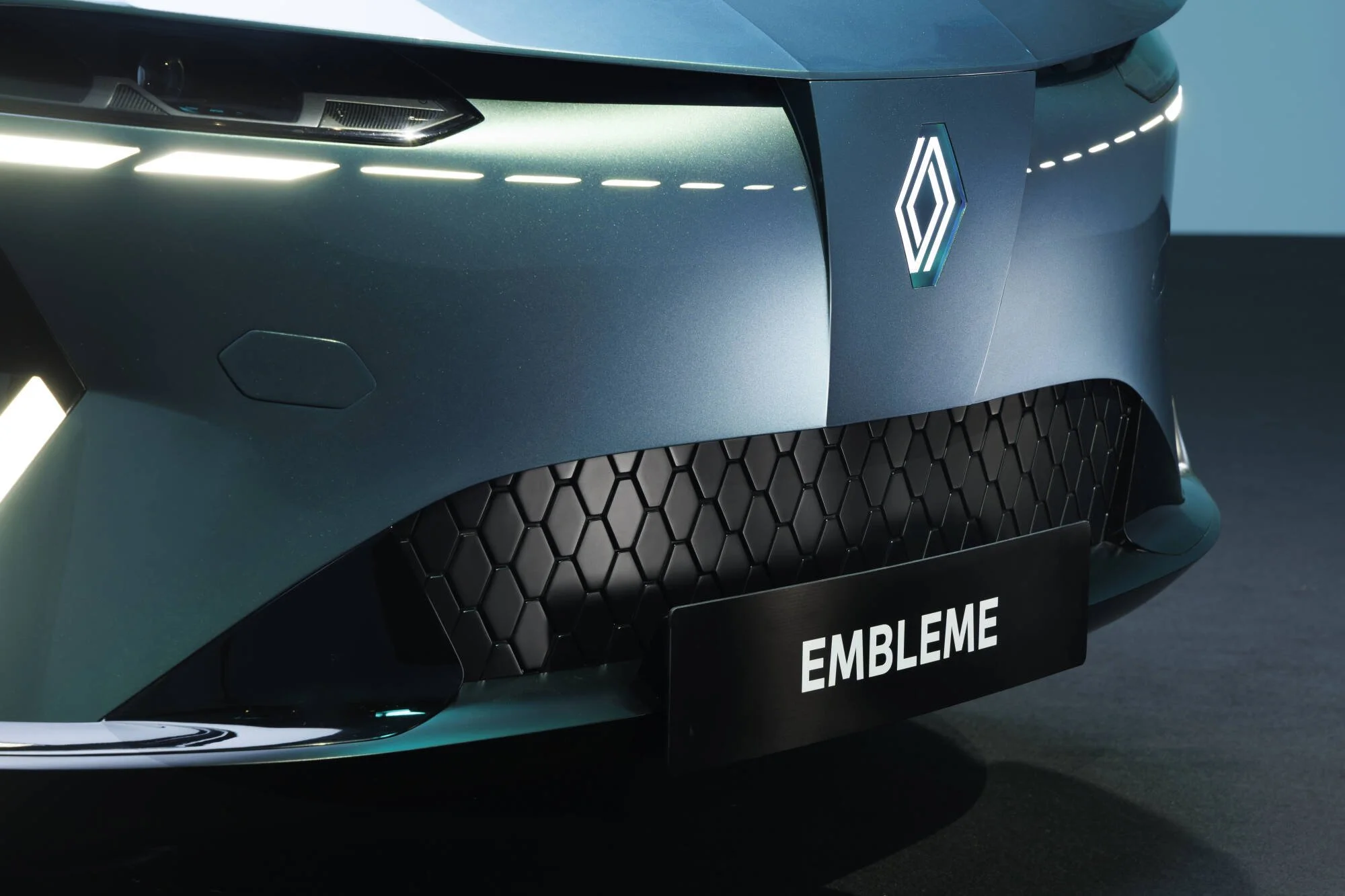
Renault Group has already designed and built a net-zero vehicle. The Renault Emblème achieves 90% reduction in total lifecycle emissions, proving that net-zero is not pie-in-the-sky; it’s already possible. How did they do it?
By tearing-up the rule book and rethinking everything, the Renault team moved the dial, from a vehicle that emitted around 50 tons of CO₂e in 2019 to just 5 tons CO₂e across its entire life cycle (third-party verified) – not by offsetting emissions, but by eliminating them; from raw material extraction to production, usage, and end-of-life. As vehicle architect, Pascal Tribotte, describes,
“It’s about rethinking every component, every process, every assumption.”
The team had to totally rethinking design, taking a future-oriented approach, designing for circular economy, Tribotte continues, “Built for second life applications, and designed to facilitate recycling at scale, once volumes allow. Every choice we made was guided by a simple principle: future-proof the vehicle by preparing for the circular economy that lies ahead.”
The Renault team found that value chain collaboration is essential – working together to redesign the whole vehicle lifecycle: “Because reaching net zero means cutting emissions not just during vehicle use (the tailpipe), but across the entire life cycle: from the materials and parts suppliers use, to how the car is assembled, driven, and ultimately recycled. That’s why collaboration from day one is essential.”
Taking this learning forward, we can start to appreciate the need for collaborative innovation in construction.
Collaborative innovation
Circular solutions cannot be developed in isolation, but will need to be developed right through the value chain – from the client, revisiting demand-side requirements and specifications – through design partners, constructors and to suppliers of building products and materials .
Each value chain partner will bring something to the table – sharing innovations, investment, risk, opportunity and benefits – and will engage in the necessary two-way dialogue of radical innovation, both up and down the value chain, and potentially across supply chains, to redesign a new alignment between demand, design, sourcing and supply.
Integrated innovation is key. This is all about finding the new sweet spot, with sustainable solutions that work technically, sustainably and commercially. We find new ways to make money through re-use of existing assets and resources.
Beleco, an international online furniture retailer, presents a great example of holistic innovation, integrating commercial as well as technical and sustainability principles – engaging the whole value chain in the process. Their business model is all about renting-out high-quality, long-life circular furniture products, designed and manufactured within an entirely new circular market ecosystem and industry infrastructure.
Starting with design, product design-life is extended towards fifty years, around four times the duration of many conventional linear economy furniture products. This means that for every single, circular economy sofa it manufactures, Beleco can displace the production required for three additional linear sofas – enabling a 75 percent reduction in embedded emissions per product.
For the customer, this also means a very attractive price point – paying around 25% less than the cost of buying an equivalent linear-sofa, over the full rental term – achieved by spreading production costs over multiple product lifecycles. The longer asset lifecycle also generates more touch-points for capturing commercial value.
This key principle of multiple value touch-points is something we need to explore more deeply in construction – a directly transferable learning point – as we explore the potential for circular business models across the range of systems, resources and materials in our building and construction projects; for example, with modular buildings, heating and ventilation systems and so on. Redesigning for circularity will also tend to challenge current standards and specifications. We will, therefore, need to engage in respectful challenge with our customers and guardians of standards to develop acceptance of new and innovative circular solutions.
For effective communications, we can appreciate how important it is to get key players in the same room, to explore new possibilities together, and to co-create new solutions that will work commercially, as well as technically and sustainably. This level of collaborative innovation, of course, also requires effective partnerships.
Effective partnerships and ecosystem
It’s self-evident that we will need to work with the right partners, when engaging with this level of innovation for circular projects.
We might start-out with our familiar partners – the people we know and trust – yet, we might find the need to develop, or further augment capabilities when shaping our new, circular value chain. Some players might adapt, although we may look to source and plug in new solutions and new providers, as we track new innovations and solutions, new start-ups and market-disrupting business models. With the right value partners selected, we need all players, working together as an integrated team, within a structured approach to collaborative design, facilitated and supported with appropriate commercial arrangements.
Drawing on another important lesson from Renault, they found a shift in supplier mindset is crucial to develop the radical levels of innovation required to achieve a net-zero project; all partners will need to be open to change what they currently do, in pursuit of new solutions for a net-zero and circular world. Pascal Tribotte played a key role, “As vehicle architect, my job was to orchestrate this ecosystem. Not by imposing rules, but by aligning our ambitions. By translating our environmental goals into technical requirements and making sure we never lost sight of the end game: a car that truly makes a difference.” Clearly, this level of change will require careful planning and coordination.
Managing multi-level change
Going circular impacts the whole value chain, market ecosystem and policy architecture. There are major implications for project design, how our businesses, value chains and supply markets work, how we make money, and for jobs and skills. Systems thinking is, therefore, essential in developing a robust change plan.

We might consider adopting a multi-level change perspective framework (MLP) to enable practical, joined-up thinking and action between three interconnected levels of circular transformation: In the mid-range with our business and value chain; engaging with the enabling policy architecture at the higher level; and the engine for change with people, customers and communities at the foundation.
We need to identify and work with key stakeholders in each level and each group of actors – including politicians, businesses, customers, citizens, banks, investors, media, educators, civic leaders, and so on – ensuring we are aligned and moving in concert, working to overcome barriers and deliver successful change.
At each stage, we can identify the range of initiatives and changes required: taking direct action on those items we can influence directly; while taking further changes that lie outside our immediate sphere of influence to the appropriate stakeholder groups at the suitable level in our ecosystem, for further action, decisions and support. Without this, we are unlikely to be successful in delivering the complexity of circular change – for example, engaging with banks to adapt their lending models in support of scaling viable circular business models.
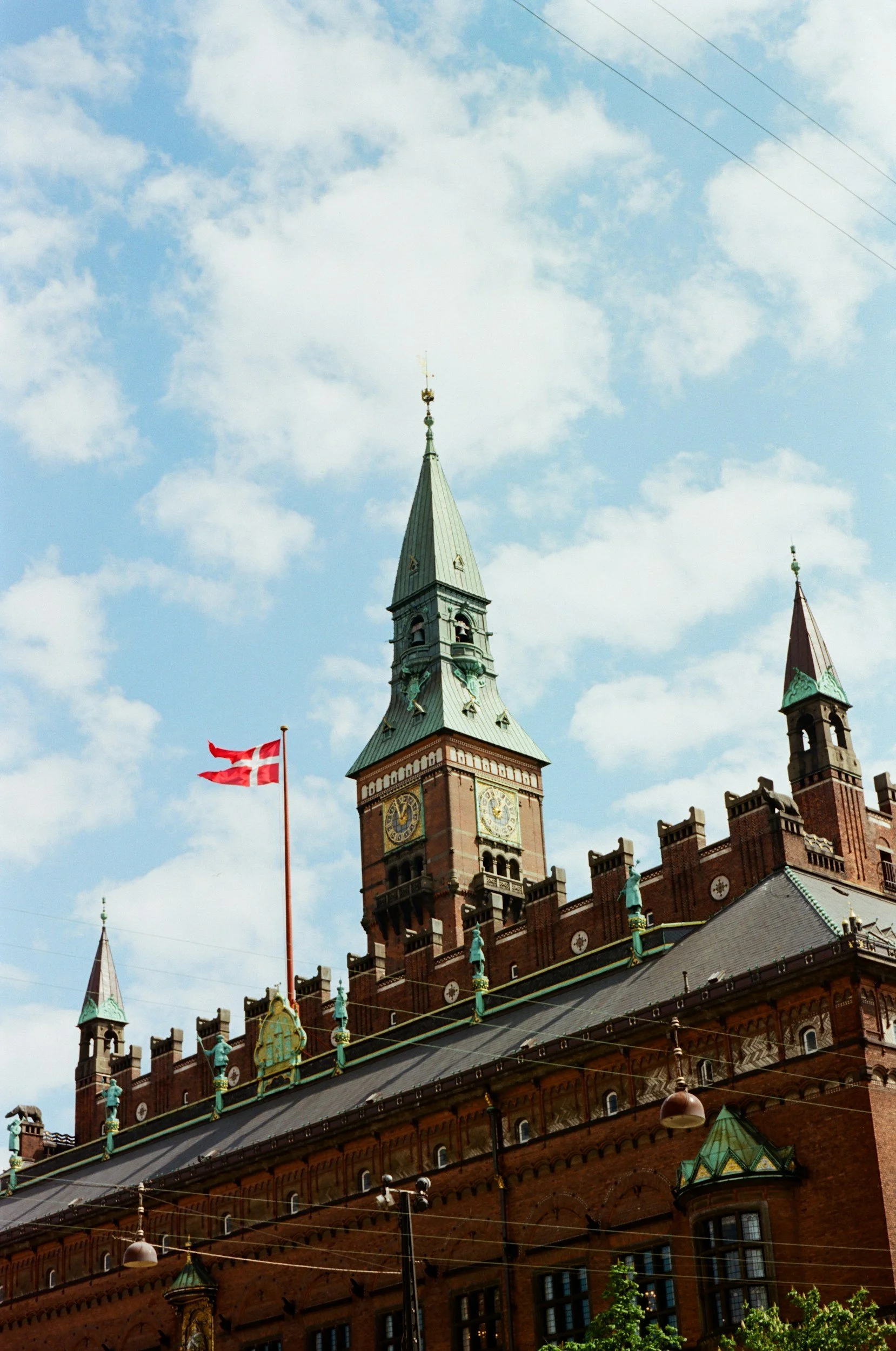
Copenhagen City Council presents a great example of an organisation that is progressive with both its climate strategy and with its model for change.
Their strategy is based on a 'whole value chain' approach, built on multiple levels of change, and designed to drive new behaviours across Denmark and Scandinavia:
Engaging with residents, businesses and wider stakeholders to maximise the opportunity for radical reductions in emissions.
Working with businesses to support circular business models and make it easier for Copenhageners to extend product lifespan and facilitate access to repair and recycling at scale.
Harnessing the City’s role as a purchaser, co-owner of companies and workplace, to drive the market and influence supply chain innovation and behaviours.
A strong focus on upgrading green skills across the workforce, as an important prerequisite for achieving successful implementation.
Of course, there’s further work to be done on other operational enablers, building the necessary conditions for change, including: board-level mandates, ensuring clarity of intent; suitably aligned incentives and commercial arrangements; resources and budgets commensurate with the scale of the challenge/opportunity; granular impact and business case tracking; and a suitable development programme for upskilling the entire workforce, from factory floors to design studios, from apprenticeships to executive leadership.
Big prizes
There’s no doubt that the construction industry offers massive potential to scale major reductions in carbon emissions – especially through the vital contribution offered by the circular economy.
In fact, the circular economy could provide the single biggest opportunity for business and industry transformation we have ever seen; not only in terms of radical carbon reduction, but also for generating commercial advantage and opportunities for skilled jobs and greater shared prosperity.
There’s certainly big prize available for circular net-zero winners – a compelling business case, with a range of operational and strategic business benefits, including risk and cost reduction, value creation and revenue growth.
As we know, the construction value chain is built on high-resource, high-carbon enterprises, especially through our project emissions. Our business models are low-margin and riddled with climate, energy and resource-commercial risks, which we ignore at our shareholders’ peril.
Fundamentally, going circular enables us to use significantly less virgin resources, greatly reducing our exposure to energy and resource price shocks. And, despite an apparent deal being struck between USA and Iran, the outlook remains fragile; highly likely to be challenging for energy and resource costs, going forwards.
Moving from risk mitigation to positive commercial opportunities; there’s more money to be made in circular resources than there is in linear waste. We might recall in Part 2 of this series, how Lendager UP harvested €120 million of building products and resources for re-use on a development project in Norway. We need to think big on circular resources.
With green public procurement on the rise, major buyers are also planning to limit their spending on high-carbon purchases and suppliers in the months and years ahead. By integrating circularity and commercial innovation, we can also maintain relevance and stand-out in a crowded market place; winning more work by enabling our customers to be more successful in achieving their sustainability targets in commercially-effective ways.
Looking at the return on investment: A study by EY found that companies leading on climate action are 2.4 more times more likely to report significantly higher financial results than expected.
All these positive outcomes should not be too surprising. This is all about creating the new sweet-spot for business, where circularity drives innovation, generating business opportunity, radically improved resource utilisation, we’re more likely to deliver superior financial performance.
Looking at the big picture, embracing the circular economy at scale provides an essential catalyst for economic, social and environmental regeneration – creating new jobs, livelihoods and greater shared prosperity, as well as greatly improved environmental impacts.
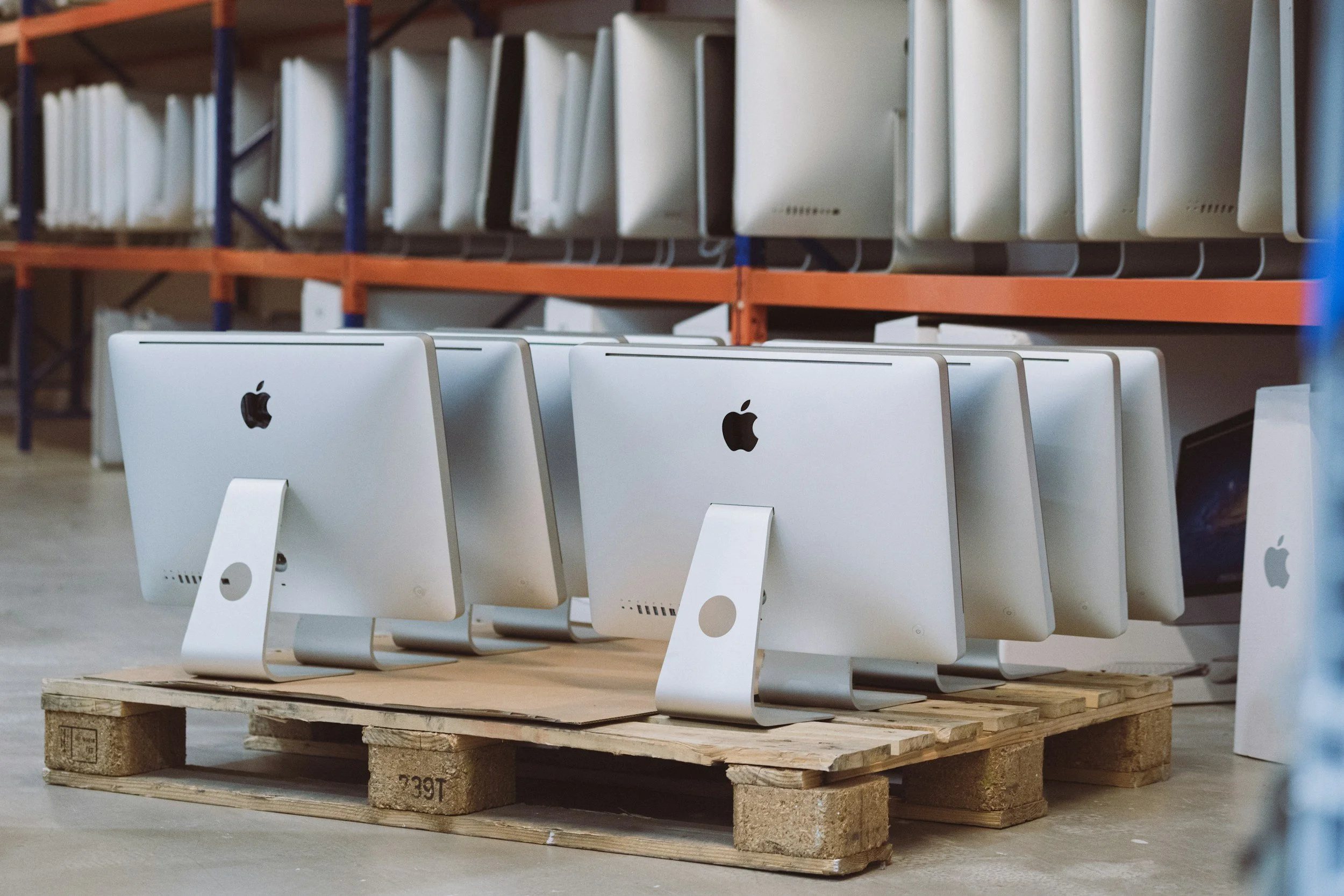
There are already up to 142 million people employed in circular economy jobs, worldwide, representing around 5.8% of the world’s workforce. Just imagine, if we double this? Perhaps, we should also imagine bringing it home – with thousands of new, skilled circular jobs in our towns cities, generating local economic value?
Could this prescription also present an antidote to the toxicity of culture wars perhaps? If we create the conditions in which people have plenty of good, skilled jobs – and good money in their pockets – most people are less inclined to worry about disinformation on immigration.
Of course, going circular means big change and with significant levels of investment, which we know can be challenging in the current economic landscape – with major geopolitical risks, trade wars, energy crisis, culture wars and other competing investment needs to consider.
For example, AI seems to be sucking-up all the attention and funding, right now; yet we cannot afford to neglect the real world economy. The physical risks to businesses that fail to prepare for climate crisis could cost them up to 25% of their profits by 2050.
And, can we continue to invest through crisis? As Ioannou and Flammer found, the most effective approach can be achieved by taking a ‘two-pronged’ strategy, with companies simultaneously saving and investing their way out of crisis: reducing CAPEX and workforce, where necessary; yet maintaining investments in R&D and sustainability, towards improved company performance and competitiveness. This ensures firms are better able to adapt, harness new opportunities and deliver superior performance in the post-crisis years.
Underpinning all of this is, of course, is necessity. The science is clear – we need to deliver radical reductions in emissions for the future of humanity, for a liveable planet. There is no business on a broken planet.
At the crossroads
The current industry mindset, process, roles, and industry structure are simply not compatible with achieving net-zero emissions and circularity – and, certainly not achieving these ends in commercially effective ways. It’s time to completely transform how we work in construction.
The good news is that going circular is technically and financially possible – and, we can harness a whole host of business benefits: reduced exposure to energy and resource price shocks; with future-oriented business models, we also generate new opportunities and long-term value.
We now stand at the crossroads – we face a choice: Do we take this moment to reinvent and embrace the circular transformation opportunity? Or, do we hunker-down and hope the tidal wave of change will, somehow, pass us by?
We can foresee there will be winners and losers in the new era. The winners will not be individual firms, seeking to maximise their own performance and value, within the old fragmented model. Rather, the winners will be those players leading and participating within high-performing value chains — creating new ways of collaborative working, driving net-zero projects and commercial advantage, through resource custodianship, integrated innovation, new business models, and by transforming the construction process, roles and skills.
The winners will be those most agile to reinvent their businesses and their value chains for circularity and competitive advantage:
Match-fit: with integrated mindsets, skills and transformational leadership.
Future-oriented vision way of working, harnessing the circular economy and new business models.
Collaborative solutions: working in concert with the whole value chain.
Integrated innovation: finding a new sweet spot for solutions that work commercially, technically and sustainably.
Effective partnerships: working aligned partners and developing capabilities.
Robust multi-level change plan: working with key stakeholder groups – to maximise the opportunity and overcome barriers.
Impact and business case: harness the full range of business benefits.
Companies that fall further behind on net-zero and circular innovation are at risk of compounding the accumulation of future business model vulnerabilities. They may also face new forms of competition from new entrants, more ready and agile to disrupt the market.
Serial under-achievers are also likely to suffer from reputational damage, reduced access to funding, a greater potential for shareholder divestment, and could be subject to hostile take-overs, as they drift towards becoming under-performing assets.
Although, going circular requires us to reimagine what we do, and develop new ways of making money. This, in turn, requires courageous leadership.
The future is there for the taking. Are we ready to do what it takes?
Written by Mike Townsend, CEO at Earthshine Group.
This article has been developed and written without the use of AI — never outsource a core competence — use it or lose it!
Further information:
We’re on a mission at Earthshine Group: We want to work with construction partners to build + deliver net-zero, circular value chains that deliver transformative impacts + commercial advantage + shared prosperity. If you’re up for this, we’d love to hear from you! >> Please DM Mike.
You might also like to join us in Copenhagen for our Sustainability Transformation Accelerator in collaboration with Copenhagen Business School (Dec 8-10); where we bring together key actors from the whole construction value chain for a 3-day, immersive + collaborative experience – to develop new insights and collaborative solutions.