

When Climate Leadership Met Climate Reality
London Climate Action Week 2026 Review Part 1
https://londonclimateactionweek.org/
"The climate crisis is no longer approaching – it has arrived." London Climate Action Week 2026 proved exactly that.
There are occasions when the setting of an event becomes as memorable as the event itself. London Climate Action Week (LCAW) 2026 will undoubtedly be remembered as one of those occasions.
Over nine days, from 20–28 June, more than 75,000 participants gathered across London for Europe's largest independent climate event. More than 1,300 events brought together government ministers, UN agencies, investors, business leaders, scientists, innovators, NGOs and community organisations to discuss one of the defining challenges of our generation: accelerating the transition to a resilient, low-carbon economy.

Yet while delegates debated climate resilience inside conference halls, London itself became an unmistakable demonstration of why those conversations mattered.
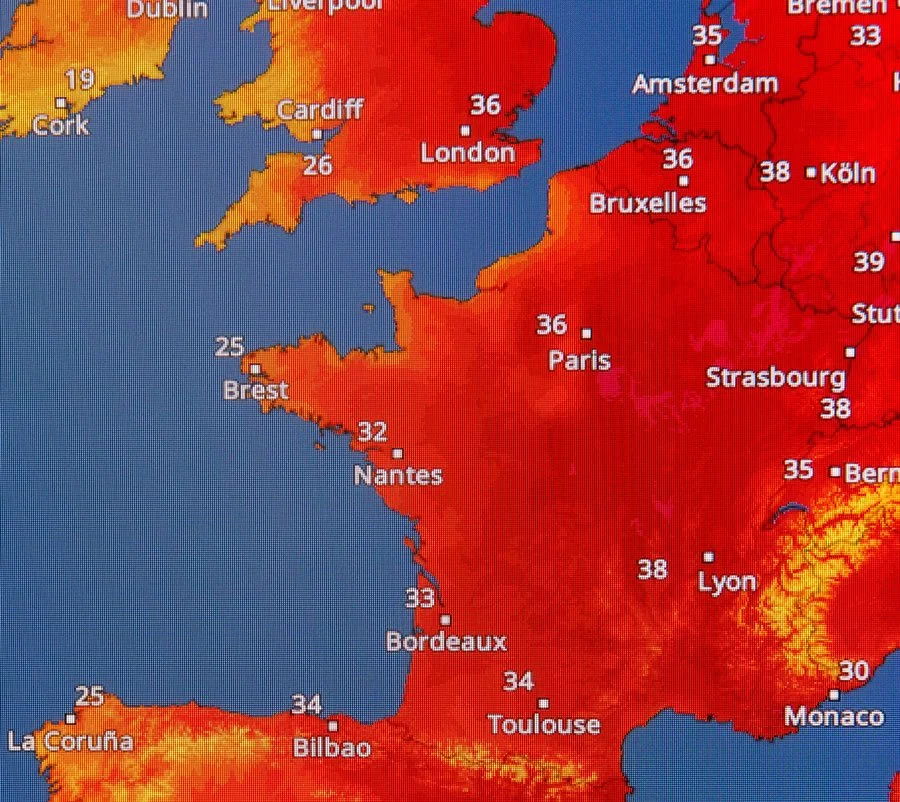
Temperatures reached record June highs, an Extreme Heat Warning was issued across much of England, schools closed, transport infrastructure struggled, and hospitals prepared for increased demand. Then came perhaps the week's defining moment: a panel discussion on adapting to extreme heat, scheduled at the London School of Economics, was cancelled because the century-old venue had become dangerously hot for participants.
The symbolism could not have been more powerful.
“There's a real irony that an event designed to help vulnerable people adapt to extreme heat in a temperate, wealthy country had to be cancelled.”
— Chris Anderson, Practical Action
For many delegates, that single cancellation became the defining image of London Climate Action Week. Climate change was no longer a future scenario under discussion. It was already shaping the conference itself.
From Ambition to Action
Since its inception in 2019, London Climate Action Week has evolved into one of the world's most influential climate gatherings. Unlike the formal negotiations of the annual UN Climate Change Conference (COP), LCAW has become a unique forum where implementation takes centre stage. It connects policymakers with financiers, innovators with investors, cities with businesses and global institutions with local communities.
The 2026 programme reflected the increasing maturity of the climate agenda. Previous years often focused on ambition, commitments and net zero targets. This year was different. Across every sector, the conversation centred on implementation.
The questions on everyone's agenda
How do organisations finance adaptation?
How do cities prepare for extreme heat?
How can businesses build resilience into supply chains?
What role should artificial intelligence play in accelerating the energy transition?
How can methane emissions be reduced quickly enough to make a measurable difference before the end of this decade?
These were no longer theoretical discussions — they were practical questions requiring immediate answers.
"The era of climate planning is giving way to the era of climate delivery."
— LCAW 2026 participant
António Guterres Sets the Tone
The week's most anticipated address came from UN Secretary-General António Guterres, whose keynote quickly became one of the defining moments of London Climate Action Week. Speaking to an audience of global leaders at the Climate Innovation Forum, Guterres acknowledged the extraordinary weather conditions before delivering a line that immediately resonated around the world:
"London isn't just calling — it's cooking."
— António Guterres, UN Secretary-General
The remark captured the mood perfectly. Rather than treating the heatwave as an unfortunate coincidence, Guterres used it as evidence that climate change is no longer an abstract future risk but a present-day reality affecting economies, infrastructure and communities across the globe. His speech centred on a simple but compelling message: the climate crisis and the energy crisis are rooted in the same problem, continued dependence on fossil fuels. "The biggest threat," he argued, "is not the transition itself, but failing to manage it."
Throughout his address, he called for faster deployment of renewable energy, stronger international cooperation and greater investment in climate resilience, particularly for countries already experiencing the worst impacts of climate change. It was not simply a call for greater ambition. It was a call for faster implementation.
Two Major UN Announcements
The Secretary-General's address was also notable because it introduced two significant international initiatives designed to shape the climate agenda ahead of COP31.
1. AI Environmental Transparency Initiative
Recognising the explosive growth of artificial intelligence and its increasing demand for electricity, water and land, the United Nations launched a new AI Environmental Transparency Initiative. The initiative calls on major AI companies to publicly disclose the environmental impacts of their operations, including carbon emissions, freshwater consumption and land use, and to commit to powering their data centres with renewable energy by 2030.
Guterres highlighted the scale of the challenge. By 2030, AI systems could consume more electricity than all but a handful of countries and require vast quantities of water to cool rapidly expanding data centres. His message was not anti-AI. Rather, it challenged the technology sector to ensure that one of the world's most transformative innovations develops within planetary boundaries.
⏰ What the initiative calls for
Major AI companies to publicly disclose carbon emissions, freshwater consumption and land use — and to commit to powering their data centres with renewable energy by 2030.
2. A Global Call to Action on Methane
The second announcement focused on methane. While carbon dioxide rightly dominates much of the public conversation, methane is responsible for around a third of current global warming and offers one of the fastest opportunities to slow rising temperatures.
Launching a new Global Call to Action on Methane, Guterres urged governments and industry to eliminate routine flaring, rapidly repair methane leaks across oil and gas infrastructure, and establish near-zero methane emissions across the energy value chain.
"Methane pollution must be next."
— António Guterres, UN Secretary-General
His message was both optimistic and practical. Unlike many climate challenges, much of today's methane pollution can be reduced using technologies that already exist — and, in many cases, at little or no net cost. The announcement reinforced a broader theme emerging throughout London Climate Action Week, that climate action increasingly depends not only on long-term innovation but also on deploying proven solutions at scale.
The Defining Theme: Adaptation
Perhaps the most significant evolution in the conversations taking place across London was the prominence given to adaptation. Only a few years ago, adaptation was often considered the quieter counterpart to mitigation. Today, it has become central to discussions about economic resilience, infrastructure planning, investment and business continuity.
Almost every major conference throughout the week, from finance forums and local government summits to engineering workshops and health discussions, returned to the same conclusion: the impacts of climate change are arriving faster than societies are adapting. The record-breaking temperatures outside simply reinforced that reality.
Businesses spoke about climate-resilient supply chains. Investors examined physical climate risks alongside transition risks. City leaders discussed cooling infrastructure, urban greening and public health. Engineers explored how buildings, transport systems and energy networks can withstand increasingly frequent extreme weather.
The shift in the conversation
Climate resilience is no longer viewed as a specialist discipline. It is rapidly becoming a core component of strategic planning — across finance, infrastructure, supply chains and public health.
A Week That Changed the Conversation
Every London Climate Action Week has reflected the priorities of its time. This year's gathering marked another important transition. The conversation has moved beyond asking why organisations should act. It has largely moved beyond asking whether the transition is possible. Instead, the focus is now firmly on how implementation can happen faster, at greater scale and with greater collaboration.
That shift was reflected throughout the week, in the UN's announcements, in discussions around sustainable finance, in conversations about resilient cities, and in the practical solutions showcased by businesses and innovators across London. Most of all, it was reflected in the weather itself. The record-breaking heatwave became more than a backdrop. It became a participant in the conversation.
Not simply another climate conference, but the moment when climate leadership and climate reality collided in full view of the world
Visit - London Climate Action Week 2026