

Move Beyond Tickbox Culture: Make Your Staff Sustainability Training Engaging And Effective

.
Sara Carroll
Managing Director
Waggle Learning Ltd
We’ve all been there. Sitting at our computer, clicking through yet another e-learning as fast as we can to get it done. Let’s be honest. Corporate training can often feel like a chore. Add the word ‘Sustainability’, and rolling out a new development program can feel extremely challenging. The topic can be daunting, and it’s hard for employees to prioritise it alongside the pressures of their everyday tasks. For this reason it can be tempting to resort to self-study and e-learning modules to help teams upskill.
However, after a career in Learning & Development at Google and experience working across many different teams and groups, I’m convinced that the best way to upskill in sustainability topics is to offer blended programs, through experiential, playful learning. After all, such an important topic is simply too critical to leave to unengaging self-study.
Here’s how:
1. Define Clear Goals
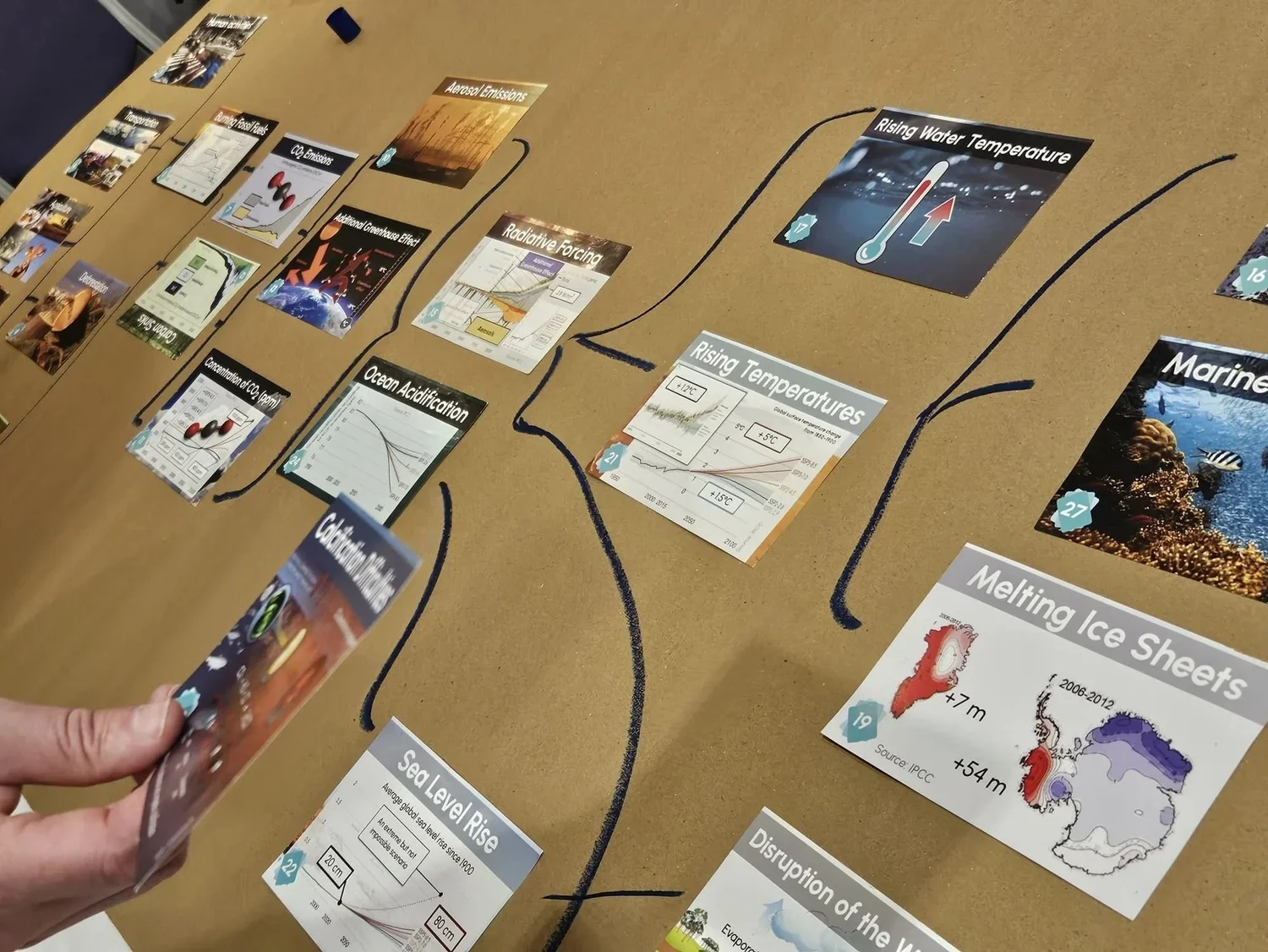
With Sustainability training, it can sometimes be hard to know where to start. The topic is broad, so it makes sense to thoughtfully define goals which have direct relevance to your company. What do you need your teams to understand and how do you want them to change their working behaviours over the coming months and years? This should help you define achievable goals which will then become the learning objectives that are the backbone of your learning programme. Remember, we often don’t need everybody in a company to understand carbon accounting, for example, whereas many leaders will be keen to ensure that their teams have a good grasp of their sustainability policies and how these are implemented across the company.
2. Make it Role-Relevant
The adult learning theorist Malcolm Knowles stated that adults learn differently to children. He argued that adult learners need to see how what they are learning about relates to their job or life. Being told something is important just isn’t enough. For this reason, it’s critical to ensure that your L&D programmes are tailored to your industry and organisation, but also allow room for participants to further apply their learning to their roles.
Learning & Development professionals often refer to the 70-20-10 model (1) of design, which states that 70% of a learner’s actual development comes from on-the-job application, with 20% happening through social learning and a mere 10% from ‘coursework’ or e-learning modules. Designing a program which directly includes hands-on, experiential learningand discussion about how to bring knowledge to specific work means that a program can be immediately effective. Add in a skilled facilitator, who can adapt their delivery as they go, building on the group’s input, and such sessions can be invaluable.
3. Include In-person
2026 has seen a slight upward trend in in-real-life events, and the majority of professional trainers consider in-person sessions to be more impactful, particularly for work, such as Sustainability training, that relies on trust or emotional safety (2). Blended learning programs, which pair high-impact in-person workshops with ongoing online touchpoints, such as virtual check-ins, learning modules or action learning sets, offer the ‘best of both worlds’ and are increasingly emerging as the gold standard for learning programs.
The complexity of some of the topics which Sustainability training covers means that it is inherently better suited to synchronous learning. Complex topics such as climate change and the circular economy require a grasp of systems thinking. Experiential learning allows teams to work together to see the ‘web’ of cause and effect in a way that asynchronous solo learning can’t. It helps transform the learner from a passive ‘click-through’ observer to an active problem-solver.
While e-learning is excellent for foundational learning, it fails at the 'messy middle' of implementation. A 2025 study by the Brandon Hall Group found that companies using blended strategies saw a 46% greater improvement in learning outcomes than those using traditional methods. Why? Because sustainability is a social challenge. If we don’t talk about it together, we won’t act on it together.
4. Embrace the Playful
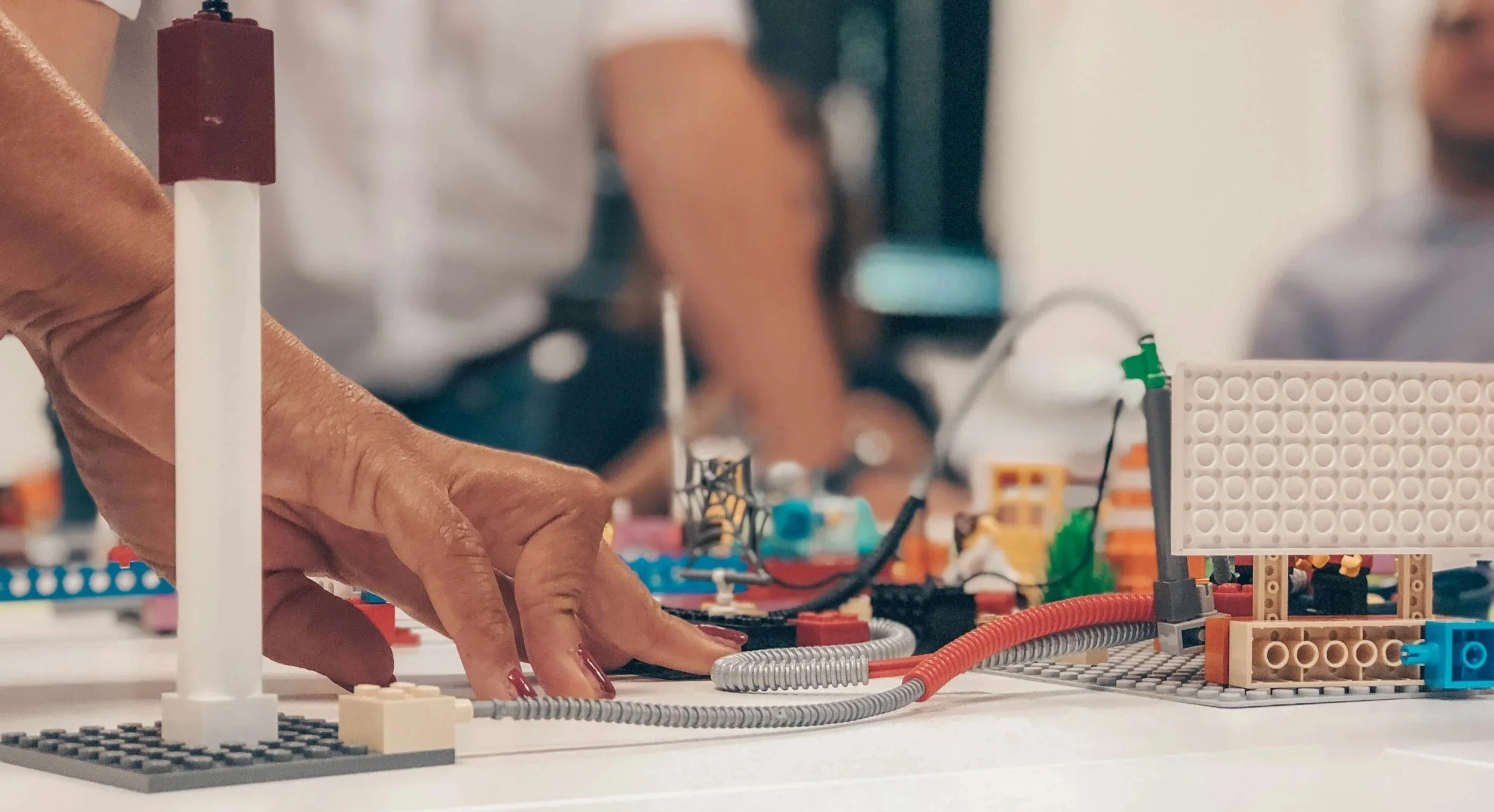
A big reason why a lot of corporate and mandatory training fails is because it’s unengaging. Learners tire quickly of passive learning formats and dry lecture-style sessions leave teams uninspired. During my time in L&D at Google, I saw firsthand that the world’s most innovative teams don’t learn by being told; they learn by doing, playing, and failing in safe spaces. Research shows that incorporating play and playfulness, such as games, storytelling, and creative activities, significantly enhances adult education by reducing stress, boosting motivation, and fostering deeper engagement. Indeed, Lego has its own methodology which does exactly that, LEGO® SERIOUS PLAY®. As Sustainability training can cover topics which are heavy, and asks learners to think deeply about so-called ‘wicked problems’, offering live sessions which are thoughtfully designed and include playful elements is a smart and effective way to deliver training which really lands.
5. Make it Sticky!
One-off workshops can be a good place to start for companies that are embarking on a Sustainability training journey. However, in order to bring about lasting behavioural change in an organisation, a longer-term approach is far more effective. Why is that? Put simply, we adults don’t really remember stuff!
Consider the ‘forgetting curve’, or ‘Ebbinghaus' curve.
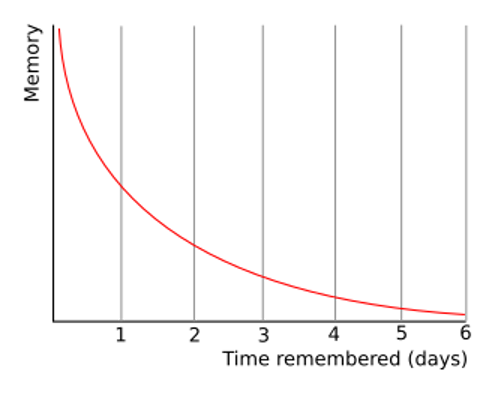
This curve shows how information is rapidly lost over time when there is no attempt to retain it. Even the most engaging and enjoyable workshop will only have a limited impact if it isn’t followed up with supplementary activities to help the participants cement their learning. These activities can range from small-group coaching to large group application sessions.
6. Measure What Matters
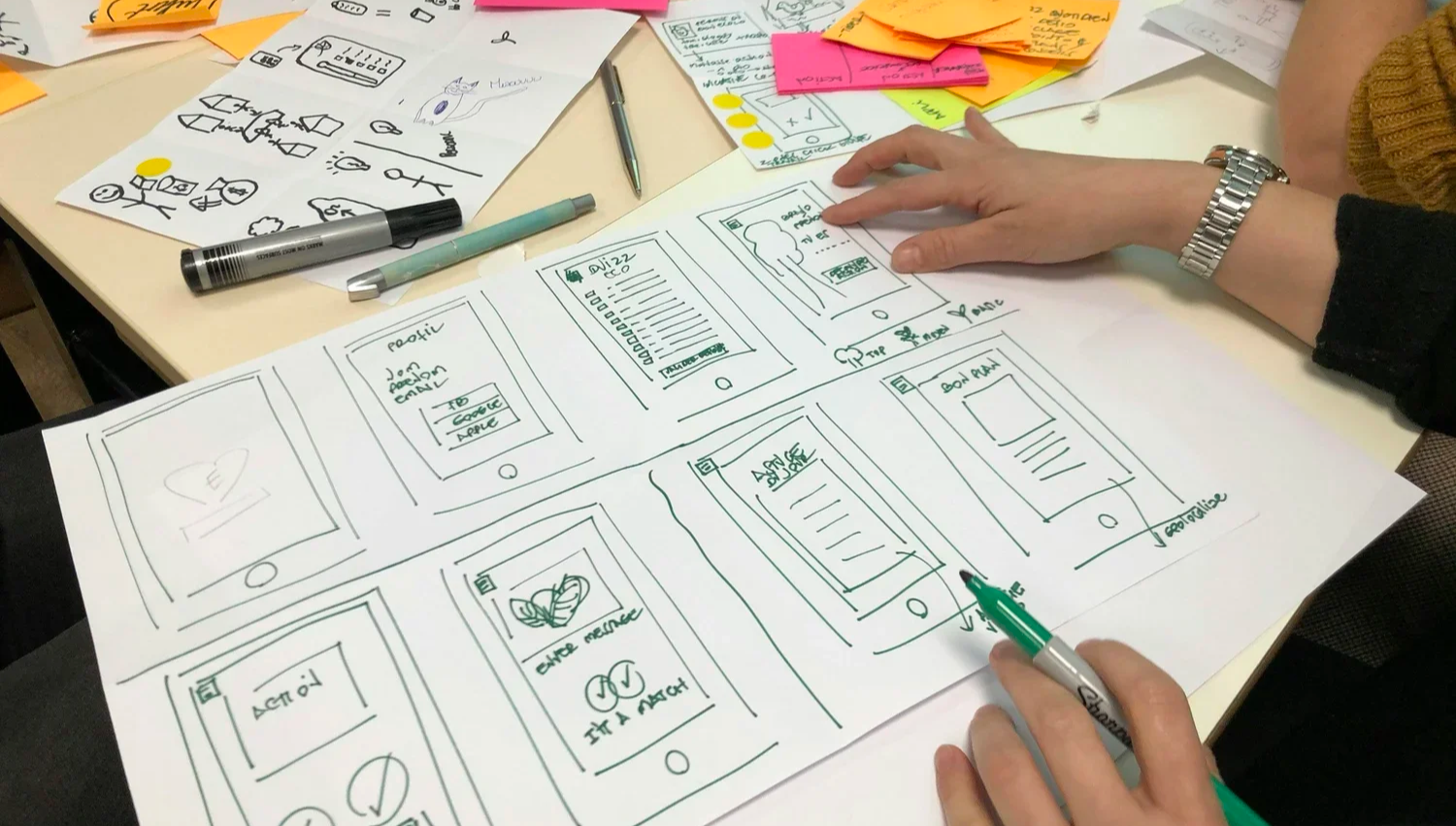
Truly effective learning programmes measure impact by business-critical metrics, not just participation and satisfaction rates. Programme success is measured by tangible changes that participants have made during and after the programme in their specific roles and departments, which relate back to those goals which leadership defined at the programme commencement. These changes link to highest level of the renowned Kirkpatrick’s Training Effectiveness model: Results. We don’t measure success by how much people liked the session, but rather by how many sustainable pivots were actually implemented in the months following the programme.
The goal of sustainability training shouldn’t be to create a company of climate scientists, but rather to create a company of climate literate future-thinking employees. By moving away from the 'click-next' culture of e-learning and toward the 'build-together' culture of experiential programs, there’s a huge opportunity waiting to not just teach sustainability but to also fundamentally transform organisational culture.
So, the next time you look at your employee sustainability training offering, consider the following. Is it designed for compliance, or is it designed for impact?
If your sustainability training is something employees endure rather than something they really get stuck into, you aren’t just wasting their time, you’re missing a huge chance to future-proof your business. We can no longer afford to treat sustainability as an optional extra. The most radical thing you can do right now is move beyond tickbox culture and give your people the agency to play, build, and lead.
About The Author
Sara Carroll
Managing Director
Waggle Learning Ltd
Sara worked for over a decade at Google, holding roles in Business Operations, Project Management and Learning & Development. In her early career working on product training, she discovered her passion for teaching and training others. She has designed and delivered award winning training programs, and been recognised as one of Google’s best trainers as part of the coveted Google Mastery Faculty.
Sara studied Modern Languages & Linguistics at Oxford University, and holds a Masters in Eastern European Studies from the Free University in Berlin. After living in Vienna, Austria, where she worked in the NGO sector, she moved to Ireland, where she joined Google.
Waggle Learning Ltd. ‘Waggle’ is the dance used by bees to communicate and teach each other where the nectar is! The Waggle dance is central to their collective intelligence. Waggle Learning draws on collective intelligence to create playful and effective training experiences focused on readying teams for the future. Waggle workshops integrate tried-and-tested modalities and activities to keep learners engaged and…dare we say it…buzzing! Waggle training programs focus on helping teams solve ‘wicked’ problems. We specialise in helping teams become more innovative and to be part of the Green transition. Visit Waggle Learning