

The First Step to Net Zero Most Businesses Skip

Stephen King
Founder and CEO
Energy Matters Ireland
When organisations start their sustainability journey, the conversation often jumps straight to solar panels, heat pumps, or carbon offsetting. One of the most effective first steps is much simpler: Understanding where energy is actually going. For many SMEs, energy is a significant operational cost, yet detailed visibility of how it is consumed across buildings, equipment, and processes is often limited. Without that visibility, sustainability strategies can quickly become guesswork. And guesswork rarely reduces either emissions or costs.
Why energy visibility matters
Energy consumption in most organisations is spread across a wide range of systems — heating and cooling, lighting, machinery, refrigeration, compressed air, and IT infrastructure.
Individually, these systems may appear efficient. But when viewed together, inefficiencies often become clear. Equipment may run outside operational hours, systems may be poorly controlled, or processes may consume far more energy than necessary.
An energy audit provides a structured way to understand this picture.
Typically, an audit will identify:
• Where and how energy is being consumed
• Areas of avoidable energy waste
• Opportunities to improve efficiency
• Potential upgrades and estimated payback periods
• Available grants or financial supports
For SMEs in particular, this type of analysis can provide insights that would otherwise require dedicated internal expertise.
From cost savings to carbon reduction
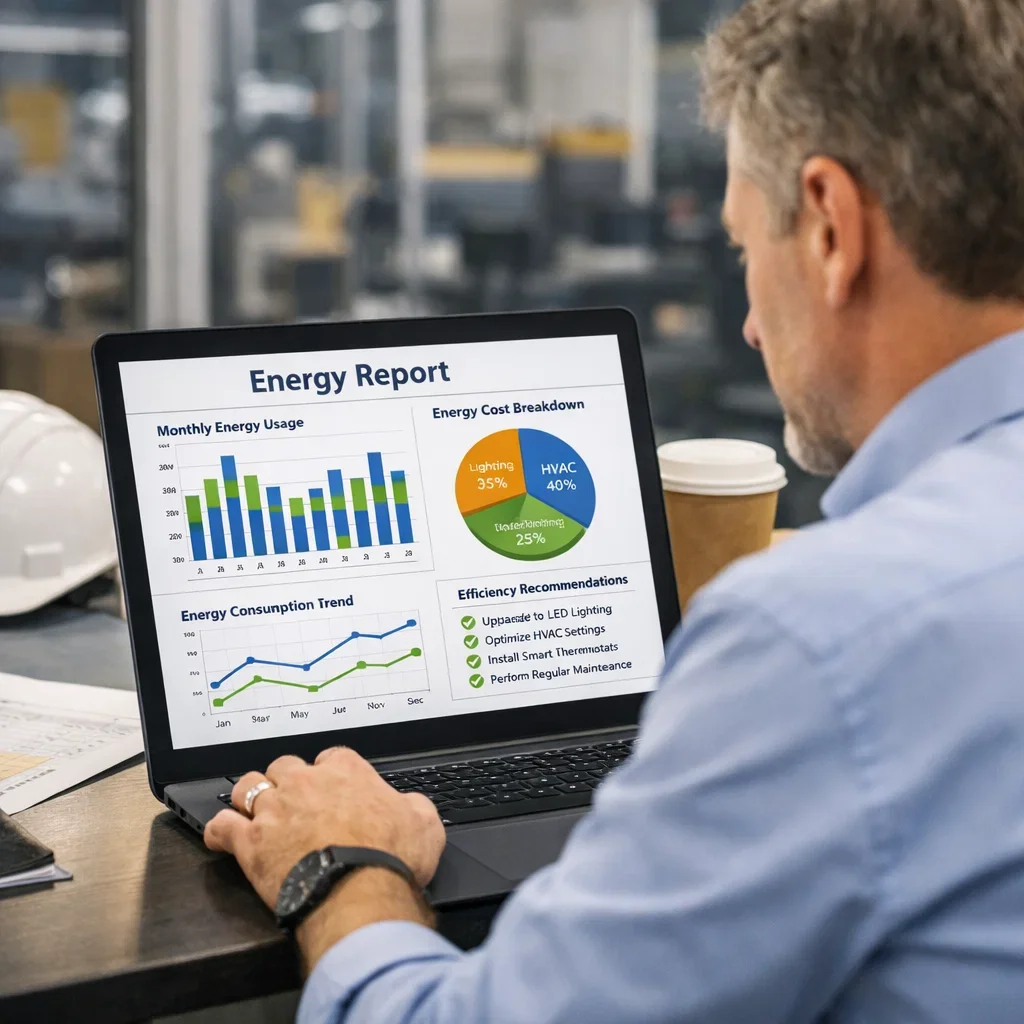
Energy audits are often associated with reducing operating costs, but their importance is growing as businesses focus more on decarbonisation and sustainability reporting.
Establishing an energy baseline allows organisations to move from assumptions to evidence-based decision making.
This enables businesses to:
✔ Strengthen ESG and sustainability reporting
✔ Develop a practical roadmap toward net zero
✔ Reduce operational energy costs
✔ Lower carbon emissions in a measurable way
In many cases, relatively modest improvements such as better system controls, lighting upgrades, equipment optimisation, or operational adjustments — can deliver meaningful reductions in both energy use and emissions.
Support available for SMEs in Ireland
Featured scheme
Recognising the importance of energy visibility, the Sustainable Energy Authority of Ireland (SEAI) operates the SME Energy Audit Scheme.
The programme helps small and medium-sized businesses access professional energy audits delivered by SEAI-approved auditors. For eligible companies, the audits — typically valued at around €2,000 — can be fully funded.
For many organisations, the audit becomes the starting point for wider efficiency projects, renewable energy investments, or longer-term decarbonisation strategies
Measurement before action
As energy costs fluctuate and sustainability expectations increase, having a clear understanding of energy consumption is becoming essential for businesses of all sizes.
Energy audits provide a practical foundation for that understanding.
Before investing in new technologies or infrastructure, knowing where energy is used — and where it is wasted — can often reveal the fastest and most cost-effective opportunities for improvement.
For many SMEs, meaningful decarbonisation begins with a simple step: Measure first. Act second.
About the author

Stephen King
Founder and CEO
Energy Matters Ireland
Stephen King is the Founder and CEO of Energy Matters Ireland (energymattersireland.ie), an independent energy consultancy focused on helping Irish businesses reduce energy costs, improve sustainability performance, and navigate the evolving energy market.
With a degree in Environmental Studies and a background in energy procurement, market analysis, and clean-energy project development, Stephen has built the company around a practical, client-first approach that combines commercial insight with technical expertise. Through services such as energy brokerage, audits, solar project advisory, and grant support, he works closely with organisations to deliver measurable cost savings and long-term decarbonisation strategies.
Stephen is an advocate of highlighting the importance of transparency in energy pricing, the growing role of renewable generation in Ireland’s energy mix, and the need for businesses to take a proactive, data-driven approach to managing their energy risk. Under his leadership, Energy Matters Ireland continues to expand its client base while supporting organisations in achieving both financial and climate goals.